




Daron Faught put 12 Rods’ Split Personalities into the hopper for a poll, and it won a tight race over Green River, Skid Row, and Josh Rouse. That means we got to return to one of the strangest bands ever to turn Ohio art-school instincts into Minneapolis indie rock, this time at the moment where all their competing urges were fighting for space on the same record. Want to bring YOUR favorite lost album to the table? Suggest it for a future episode or community poll.
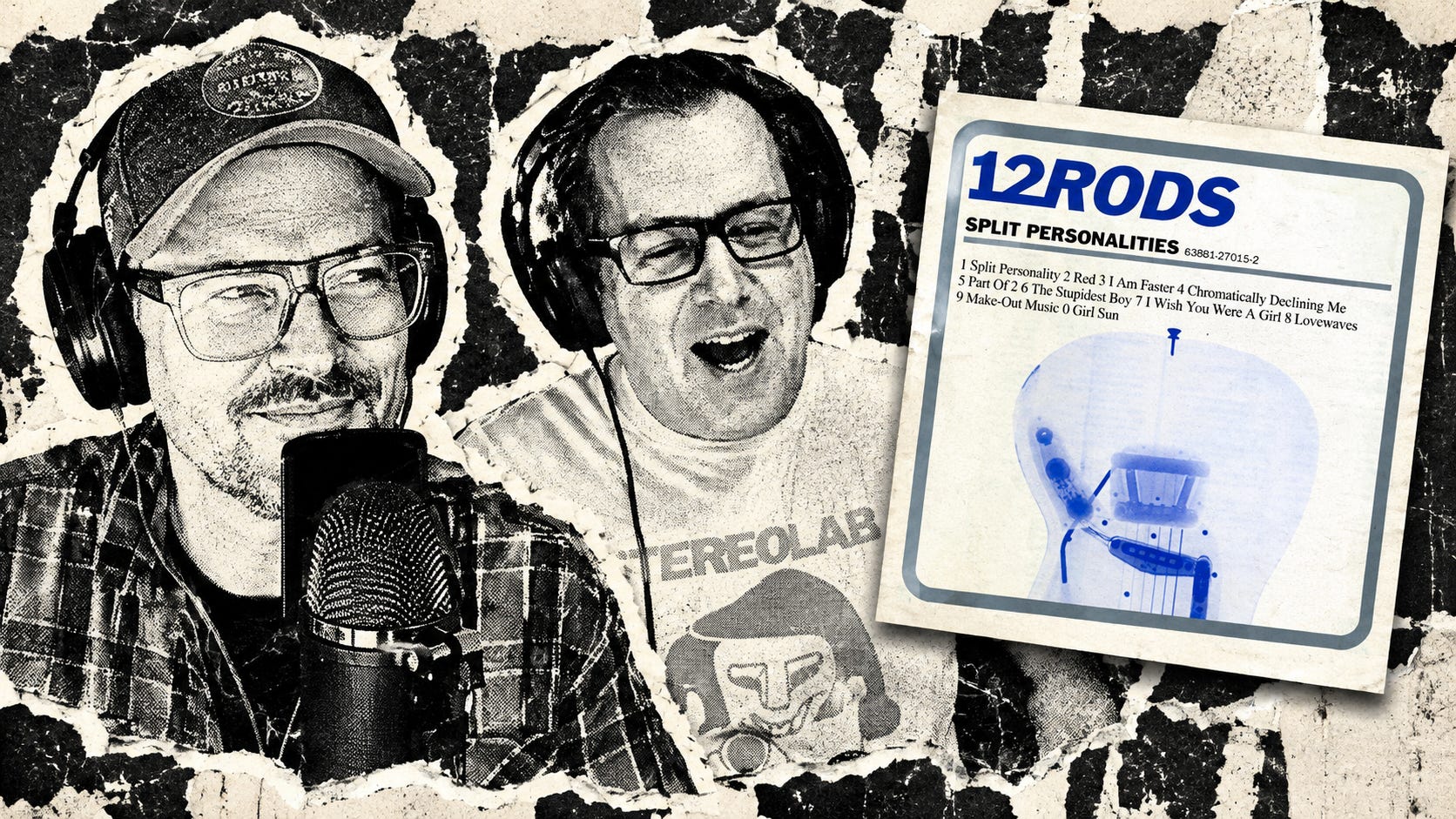
The 1998 Album That Refused to Pick a Personality
What if the problem is that Split Personalities has too many good ideas?
When 12 Rods released Split Personalities in 1998, alternative rock was supposed to be getting simpler. Radio had room for polished post-grunge, pop-punk hooks, nu-metal heaviness, and the last big commercial turns from the first wave of 90s alternative. Then came this band, originally from Oxford, Ohio and transplanted to Minneapolis, with a record that kept refusing the obvious answer.
This was not a record interested in delivering one clean, sellable version of itself. It could sound like melodic power pop for a minute, then detour into drum-and-bass rhythms, synthetic textures, loungey passages, fuzzed-out guitar, and something that feels almost like art-rock prog without the cape-and-Mellotron baggage. It is catchy in pieces, weird in pieces, and often both at once.
The record was released by V2 Records, the label founded by Richard Branson after his departure from Virgin, and it earned a remarkable 9.7 from Pitchfork. That score is part of the mythology now, especially because Split Personalities does not feel like the kind of record built for easy consensus. Pitchfork later described the band’s early work as balancing “spacy, synth-driven lounge jazz” with “sharp-toothed arena-pop.”
That tension is exactly why it still works. Or, at least, why it keeps demanding another listen.
The Band Behind the Contradiction
12 Rods had already established themselves as a band with a difficult-to-categorize center of gravity. The group formed in Ohio before moving to Minneapolis, with Ryan Olcott as its central songwriter and constant presence. AllMusic describes them as a post-new-wave unit, while their later history shows just how much the band’s identity remained tied to Olcott.
On Split Personalities, Olcott handles vocals, guitar, synthesizer, and bass, while Eve Olcott contributes synthesizers, guitar, and vocals. Christopher McGuire’s drumming becomes one of the record’s defining voices, and it is the thing that finally made the album click most clearly for us. The rhythm section does not merely hold the songs together. It constantly changes the songs’ temperature.
This is the first 12 Rods album we have covered in 2026 after revisiting Lost Time, the 2002 album produced by Todd Rundgren. The two records share DNA, especially the fearless collision of melody and complication, but Split Personalities feels more restless. It feels like a band testing every door in the room before deciding which one to walk through.
That can be exhilarating. It can also make the album feel like it is still deciding what it wants to become.
The title is not subtle, but it is accurate. Almost every song has its own split personality.
Drums Make the Record Move
The biggest revelation here is McGuire’s playing. The drums make this album feel alive even when the arrangements are packed with overdubs, electronics, and sudden stylistic pivots.
Take “Chromatically Declining Me.” The song locks synth rhythm and acoustic drums together until it develops a galloping, nearly techno feel. Then the tom work takes over in a way that feels physical and performative, pulling the track out of its machine-like pattern and into something stranger. It is not just a clever arrangement. It sounds like a real band taking risks in real time.
That same dynamic tension runs through the record. The drums can support down-strummed, distorted guitar passages without losing their snap. They can pull a song toward a lighter, almost jazzy or lounge-like space. They can make a mid-tempo groove feel like it has hidden trapdoors underneath it.
We kept coming back to how unusually good the drum sound is, too. It is roomy but punchy, natural but forceful. The opening fill on “Make Out Music” jumps out with the kind of immediacy that makes you want to rewind just to hear the sound of the room again.
This is where Split Personalities earns some of its reputation. Beneath the surface-level weirdness is a band that understands arrangement, texture, and dynamics at a high level. The record may feel scattered, but it is rarely careless.
Power Pop With Its Wires Exposed
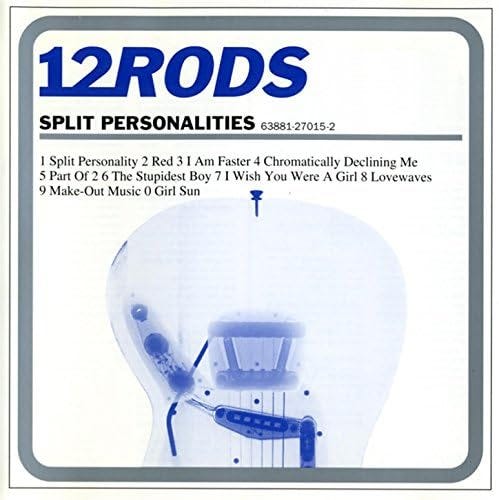
There is a power-pop record inside Split Personalities. You can hear it in “The Stupidest Boy,” in the melodic instincts throughout “Split Personality,” and in the way certain chorus fragments threaten to become massive. The album’s ten-song, 51-minute track list makes clear that 12 Rods were not afraid of giving those ideas room to stretch.
But this is where the record gets complicated.
12 Rods regularly set us up to expect direct, three-and-a-half-minute melodic payoffs, then refuse to give them. Instead of simplifying a hook, they veer into a new keyboard sound, an unexpected guitar texture, an awkwardly fascinating vocal delivery, or a longer instrumental section. You can hear echoes of Brian Wilson in the melodic sensibility, a little Procol Harum in the organ colors, flashes of Faith No More in the keyboard mood shifts, and an art-rock nerve that recalls Brainiac.
That is a lot of information for one band to process. It is also the point.
At their best, 12 Rods sound like they are rebuilding familiar rock language out of unfamiliar materials. The hooks are there, but they are bent. The choruses are there, but they may not arrive where you expect them. The pop instincts are there, but the band keeps challenging itself to move past the obvious resolution.
This is not music that rewards passive listening. Put it on while doing something else and you may wonder whether your playlist jumped albums. Sit with it and the logic starts to reveal itself.
Ryan Olcott’s voice is the album’s sharpest dividing line.
There are moments when it works beautifully. When he leans into a breathier approach, the singing gets intimate and vulnerable. When he opens up and belts, the record gains a necessary sense of release. On quieter material like “I Wish You Were a Girl,” there is an emo-adjacent fragility that keeps the song from drifting completely into novelty.
But the record also leans hard on high-register theatricality, robotic cadences, repetition, and vocal choices that can feel deliberately abrasive. Sometimes that is a productive tension. Sometimes it feels like the voice is competing with the music rather than riding inside it.
The problem is not a lack of ability. The voice has range, personality, and flexibility. The issue is that Split Personalities often asks it to be one more eccentric texture in an arrangement already full of eccentric textures. When everything is trying to be distinctive, the vocal can become the thing that tips the song from adventurous into exhausting.
That is why the album produces such different reactions. If you hear those choices as a band pushing past conventional indie rock, the record becomes thrilling. If you hear them as affectation standing between you and the hook, the record can feel longer than its 51-minute runtime. Apple Music lists the album at ten tracks and just over 51 minutes, including “Split Personality,” “Red,” “I Am Faster,” “Chromatically Declining Me,” and “Part of 2.”
That friction is built into the record.
A Great Album That Needs an Editor
The main criticism we kept circling was not that 12 Rods needed fewer ideas. It is that they may have needed more editing.
“I Am Faster” is the clearest example. Its slow, heavy build has real atmosphere, with a sense of weight that brings Failure to mind. But the song spends so much time approaching its destination that it risks making the listener wait for a version of the track that is already inside it. Start it closer to the quiet vocal section, cut some of the scene-setting noise, and the impact could be even greater.
The same goes for some of the false starts, repeated intros, and extended passages scattered across the album. Those choices are very 90s, when bands often treated extra time at the beginning of a song as proof of mood, seriousness, or texture. But a few trims could have made this record hit harder.
That is the central what-if of Split Personalities. Should 12 Rods have tightened these songs into concise, strange power-pop singles? Or should they have pushed further into the prog and art-rock side, making the weirdness even less apologetic?
Instead, the album lives right in the middle. That can be frustrating. It can also be uniquely compelling.
Few bands make music that sounds this smart, this catchy, this awkward, this technically assured, and this allergic to playing it safe.
The Verdict Is Split Too
Split Personalities is a record for listeners who can enjoy a hook with a crooked smile. Its fans hear an undervalued late-90s masterwork, and that Pitchfork 9.7 certainly helped cement the legend. Wikipedia and Discogs both document the 1998 release and its still-discussed critical reputation.
We hear the appeal. The drumming is exceptional. The arrangements are daring. The electronic and organic elements often lock into something nobody else was making in quite the same way. This is a band with real musical intelligence, not just a stack of influences.
But the flaws are hard to ignore, too. Some songs go on too long. The vocal mannerisms can wear down their welcome. The record occasionally feels caught between two excellent versions of itself: a tightly wound oddball pop album and a sprawling art-rock statement.
So here are the questions we keep coming back to:
Is this a power-pop album that needed more hooks, or an art-rock album that needed to get weirder?
Which 12 Rods personality do you prefer: the strange melodic pop band or the restless experimental band?
Do the vocals make the record more distinctive, or do they keep you at arm’s length?
Which song is the best case for Split Personalities as a lost 90s classic?
Listen to the full episode for where we ultimately land, then drop a comment with your own verdict. This is exactly the kind of record that gets more interesting when people argue about it.
Episode Highlights
00:44: The poll ballot, Green River, 12 Rods, Josh Rouse, and Skid Row enter a close community race
05:42: The 12 Rods story so far, Oxford, Ohio roots, Minneapolis relocation, and Ryan Olcott’s long-running project
08:24: Split Personalities arrives, its V2 Records release and Pitchfork’s 9.7 score
10:24: “Chromatically Declining Me,” how synth pulse and live tom work create the album’s most unusual groove
16:52: “Make Out Music,” why the drum sound becomes a major part of the album’s appeal
19:23: “The Stupidest Boy,” power-pop instincts colliding with genre-hopping arrangements
24:30: “I Wish You Were a Girl,” slowcore, emo, and the record’s quieter emotional side
30:49: The difficulty of a power-pop album that declines to deliver conventional big hooks
35:31: The vocal debate, theatricality, robotic phrasing, and the line between distinctive and grating
40:28: “I Am Faster,” false intros, long songs, and the case for a tighter edit
44:21: Final verdicts, a worthy album for one of us and a better EP for the other
50:58: Why 12 Rods remain such a hard band to categorize


