




The Dig Me Out community sent four wildly different records into September’s poll, then pushed two of them into a runoff: BulletBoys’ 1991 hard-rock swerve and the 1997 soundtrack to David Lynch’s Lost Highway. The Lynch fever dream won 62 to 38, and it brought Ian McIvor back to help us unpack a record where David Bowie, Nine Inch Nails, Lou Reed, Marilyn Manson, Rammstein, and Angelo Badalamenti somehow occupy the same dark hallway. Want to bring YOUR favorite lost album to the table? Suggest it for a future episode.
Released February 18, 1997 through Nothing and Interscope, Lost Highway arrived three days before Lynch’s film reached U.S. theaters. Trent Reznor produced a 23-track, 74-minute listening experience that functions less like a collection of songs and more like a controlled collision between old Hollywood unease, late-90s industrial abrasion, smoky jazz, electronic dread, and rock radio ambition.
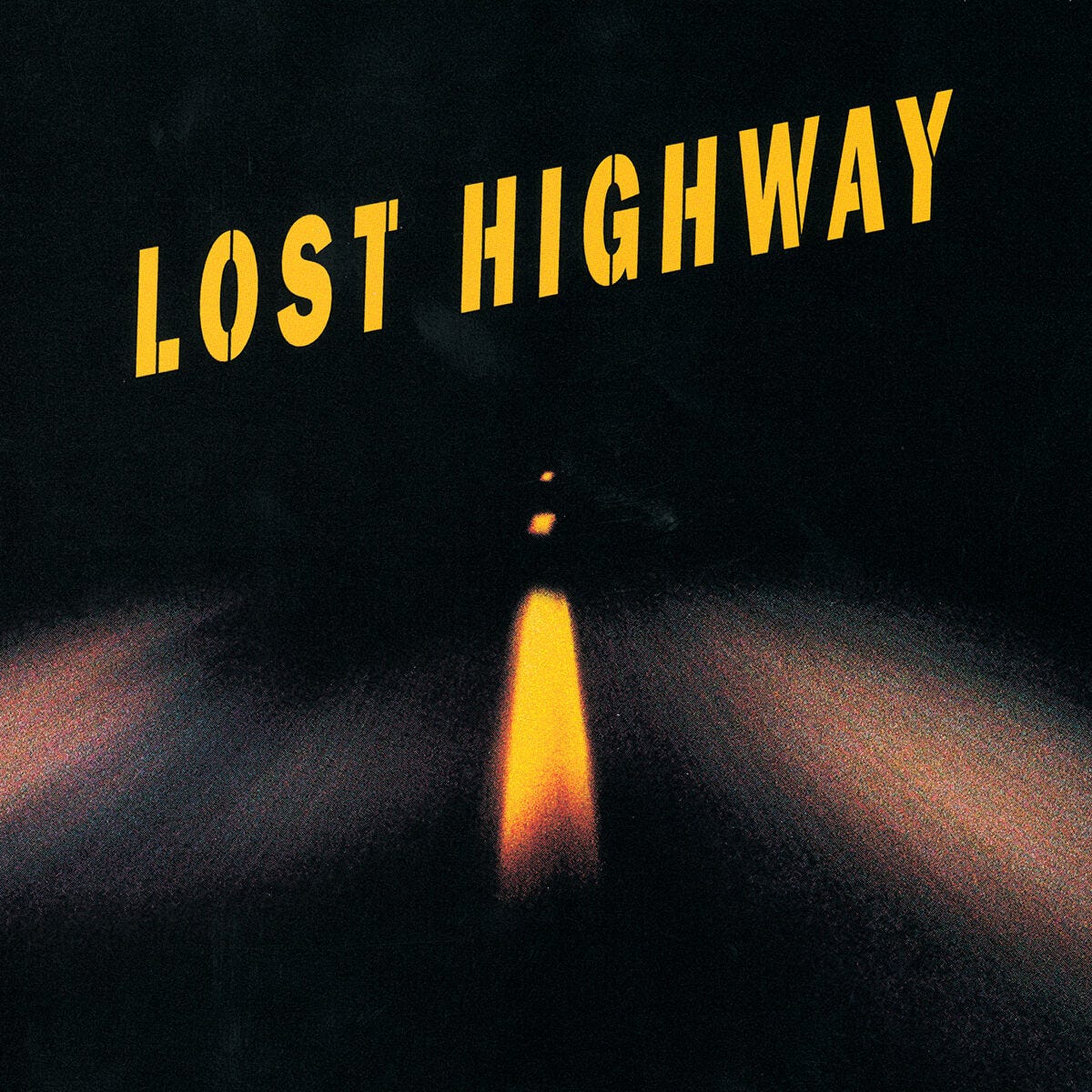
A Soundtrack That Feels Like A Movie
The best soundtracks do not merely remind us of scenes. They build their own world.
That is the trick Lost Highway pulls off. Even before the movie’s dream logic, shifting identities, and fractured reality enter the picture, the record creates the sensation of driving at night with nowhere reassuring to stop. The opener, Bowie’s edited “I’m Deranged,” establishes the terms immediately: nervous rhythms, synthetic shadows, a voice that sounds both composed and unmoored.
The record is full of moments that should not coexist. You move from The Smashing Pumpkins and their brooding “Eye” to Badalamenti’s score pieces, then from Barry Adamson’s noir cues to Reed’s “This Magic Moment” without ever fully escaping the same neon-lit bad dream.
That coherence is the real achievement. This should have been a promotional grab bag, the kind of 1990s CD built around a single new song and a pile of contractual obligations. Instead, Reznor and Lynch make the shifts feel intentional. The album’s pop-facing songs act as landmarks, while the score pieces turn the road between them into fog.
Trent Reznor’s 1997 Map
Lost Highway captures the moment when Trent Reznor was not merely one of alternative rock’s biggest names, but one of its most useful curators.
By 1997, The Downward Spiral had made Nine Inch Nails unavoidable. Reznor was also producing Marilyn Manson, experimenting with darker electronic textures, and helping define the sonic language that would spread through rock, industrial, dance music, and film over the next decade. This soundtrack gave him a place to connect those worlds without pretending they were the same thing.
“The Perfect Drug” remains the center of gravity. It is restless, dense, overclocked, and almost too complicated to imagine as a conventional single. The track’s reputation as a live rarity only adds to its mystique, but its larger role here matters more: it turns the soundtrack from a Lynch collectible into a real 1997 rock artifact.
Reznor’s fingerprints also run through “Videodrones; Questions,” recorded with Peter Christopherson, and the closing “Driver Down.” These are not palate cleansers. They are connective tissue, making the record feel less like a playlist and more like a broadcast intercepted from a different reality.
The Strange Beauty Of The Seams
A soundtrack can be more than an album, but that also means it can be less satisfying as an album.
That tension drives our whole conversation. The sequencing is bold, but it is not always smooth. Barry Adamson’s pieces, including “Mr. Eddy’s Theme 1,” “Mr. Eddy’s Theme 2,” “Something Wicked This Way Comes,” and “Hollywood Sunset,” add character and period detail. Yet their thin, sometimes dry production can pull a listener out of the thick industrial-noir atmosphere established by Bowie, Reznor, and Badalamenti.
The heavier turns can also arrive with startling force. “Rammstein” and “Heirate Mich” do not ease their way into the record. They kick open a door. That is probably the point, especially if you know the film’s escalation, but it exposes the difference between a soundtrack designed to intensify scenes and an album designed for repeat listening in a car, headphones, or a late-night room.
There is a compelling argument that Lost Highway should have been two discs: one for the songs and one for the score. Put Bowie, Nine Inch Nails, the Pumpkins, Reed, Marilyn Manson, Rammstein, and Jobim in one sequence. Let Badalamenti and Adamson occupy another. But separating them might also erase the album’s central weirdness. The friction is not a flaw that can be fully edited away. It is the record’s identity.
A Perfect 1997 Time Capsule
This album could only have happened in 1997.
The mix is too particular to its moment. Bowie was in the industrial-art-rock phase that had produced Outside. The Pumpkins were navigating the aftermath ofMellon Collie and the Infinite Sadnessand moving toward the electronic and piano-driven territory ofAdore. Reznor was between the massive shadow ofThe Downward Spiraland the long, difficult path towardThe Fragile. Rammstein had not yet broken widely in the United States, but the soundtrack gave listeners an early encounter with their controlled, mechanized menace.
Then there is the weirdest left turn of all: Antônio Carlos Jobim and “Insensatez.” On paper, it is absurd to put a bossa nova master between Marilyn Manson and Barry Adamson. In a David Lynch setting, it makes a kind of perfect emotional sense. Beauty becomes disorienting. Familiarity feels suspect. A warm sound can be more unsettling than a distorted guitar when it appears in the wrong room.
That is why the soundtrack still lands. It is not simply a compilation of artists who mattered in the 1990s. It is a snapshot of a cultural moment when industrial, alternative rock, electronic music, and noir cinema were all sharing the same uneasy air.
The Verdict Is In The Friction
Lost Highway works best when you let it remain unresolved.
Is it a great album, or a great set of scenes that never quite wanted to become an album? Does the score strengthen the songs, or interrupt them? Would trimming a Rammstein track, several Barry Adamson cuts, and the less essential detours make this a killer 45-minute record? Or would that neatness destroy what Lynch and Reznor were actually trying to preserve?
The record sold in serious numbers for a soundtrack of its kind and gave listeners a rare meeting point for Bowie devotees, Nine Inch Nails obsessives, Pumpkins fans, industrial heads, and Lynch completists. But popularity is not the same as clarity. The debate is still alive because every listener can build a different version of Lost Highway in their head.
Listen to the episode for our full verdict, then drop a comment: which track holds this soundtrack together, and which one sends you looking for the skip button?
Episode Highlights
00:42: The Union runoff, how Lost Highway beat BulletBoys’ Freakshow 62 to 38
05:18: David Lynch’s movie world, from Dune and Blue Velvet to Twin Peaks and Lost Highway
12:07: Trent Reznor, David Lynch, and the origin story behind the soundtrack
20:33: “I’m Deranged,” “The Perfect Drug,” and why the sequencing feels like a noir narrative
33:13: The Barry Adamson problem, atmosphere versus interruption
34:20: Why score pieces and rock songs can make difficult album companions
40:04: Marilyn Manson, late-1990s soundtrack economics, and the CD-era single trap
44:17: Why Lost Highway is a pure 1997 time capsule
47:31: Worthy soundtrack, better EP, or decent single?


