



Chris Martz brought us Tinfed’s 2000 major-label swan song, Tried + True, via the Dig Me Out Board of Directors. It is a record caught between late-90s alternative rock muscle and the digital future it could almost see, with enough strange texture to make us wonder why it vanished so completely. Want to bring YOUR favorite lost album to the table? Suggest it for a future episode.
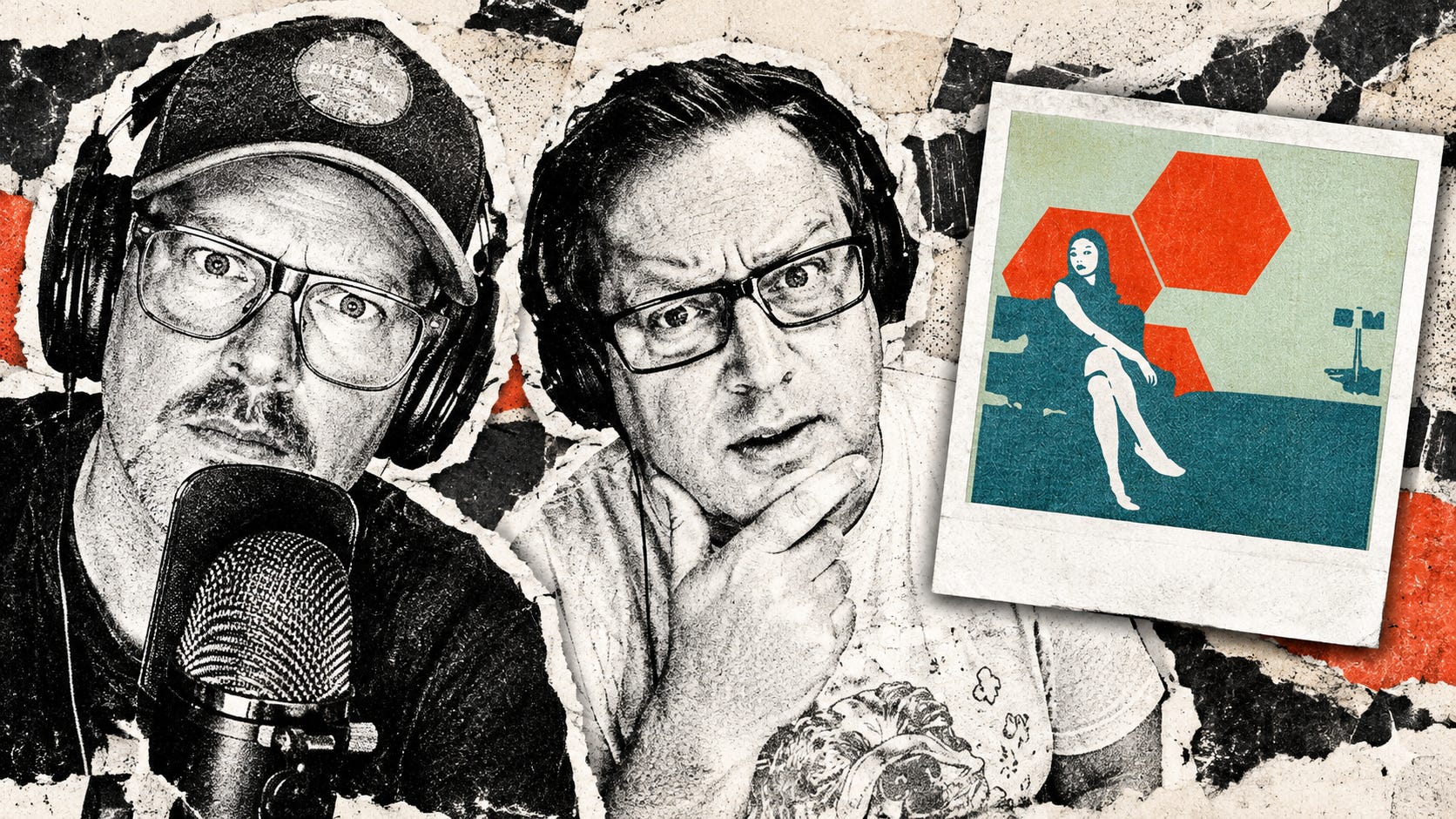
The Future Was Almost Here
What if the missing 2000 alt-rock hit was hiding on a Disney-backed label?
By August 2000, alternative rock had splintered into a thousand possible futures. Britpop melancholy was still hanging in the air. Industrial rock had filtered into the mainstream. Electronic beats were no longer exotic in a guitar band. Everybody wanted the next mutation, the sound that could carry the weirdness of the late 90s into a new decade.
Tinfed had a version of that sound on Tried + True, their third and final studio album, released August 22, 2000 through Hollywood Records. The Sacramento band had already traveled through the indie-label world with Synaptic Hardware and Hypersonic Hyperphonic before landing in a strange major-label orbit through Third Rail and Hollywood. Wikipedia confirms that this was their final studio record, which makes its reach for a bigger, more futuristic sound feel a little bittersweet in retrospect.
This is not a lost masterpiece simply because it failed to become one. It is more interesting than that. Tried + True sounds like a band arriving at a compelling identity, then occasionally wandering away from it before the song is over.
The record lives in that tension. When it finds its balance, it has a sleek, moody, almost cinematic pull. When it overcorrects toward programmed beats and electronic atmosphere, it can feel like it has mistaken the frosting for the cake.
Still, the best moments make a strong case for keeping this record in the conversation.
Hollywood’s Oddest Rock Bet
Hollywood Records was never an obvious home for a band like Tinfed.
The label had the resources of Disney behind it, but its catalog often felt like a wildly uneven aisle in an old record store: Queen, soundtrack releases, Los Lobos, Fishbone, Fastball, and plenty of artists who could not have had much in common beyond a shared logo on the back cover. That mismatch becomes part of Tried + True’s strange charm. It is a real major-label release from an era when “major label” still meant something, yet it feels like the kind of record you might discover in a used bin with no memory of ever seeing it advertised.
Tinfed had a more direct brush with the cultural machinery of 2000, too. “Immune” appeared on the Mission: Impossible 2 soundtrack, putting the band near one of the year’s biggest blockbuster franchises, even if that placement did not translate into lasting visibility for the group.
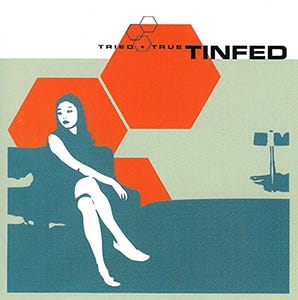
The album’s own sleeve and aesthetic suggest a mid-century vision of tomorrow, the kind of sleek science-fiction design language that makes the music’s electronics feel intentional rather than ornamental. That is the important distinction here. Tinfed were not trying to become Nine Inch Nails, and they were not building a full-on industrial machine. They were making melodic alternative rock with digital shadows around its edges.
That lane had room to grow. The question is whether the songs could consistently carry it.
Sci-Fi Pop With a Human Voice
The strongest idea on Tried + True is the sound we kept calling sci-fi pop.
The guitars are present but rarely dominate. Bass lines ground the songs. Drums often feel performed rather than simply programmed, but they are treated, doubled, and surrounded by electronic texture until the grooves feel slightly displaced from ordinary alt-rock. Keyboards flicker in and out. Acoustic layers can suddenly widen into electric choruses. A staccato guitar part might show up just long enough to change the song’s temperature.
That is the record’s best trick. Tinfed build a futuristic mood without disappearing into pure electronic music.
The opening stretch makes the case. “Way Thru,” “Immune,” and “Drop” create a three-song run that feels focused, concise, and alert to detail. A slight harmonic or synth-bass shift in “Immune” is enough to make its second verse feel different from the first. It is not a giant reinvention, but it signals that somebody in the room was thinking about movement, contrast, and the small sonic adjustments that keep a mid-tempo song from flattening out.
The vocal is the other crucial element. Ray Osborne’s delivery can be breathy, rhythmic, intimate, or suddenly more forceful in a chorus. He drops into falsetto without turning it into a gimmick. At points, there is a little of Myles Kennedy’s dramatic reach, though not that full-on powerhouse force. Elsewhere, the phrasing can feel closer to Stephen Malkmus, especially in its almost-spoken looseness.
It is an unusual instrument, and it gives Tinfed an identity their name never quite does.
When the Mix Gets in the Way
The frustrating part is that Tried + True often knows what it wants to be, but not always how to present it.
There are moments where the production feels muddy or uneven, especially when a song swells into a bigger section. You can hear guitars, electronics, drums, and vocal parts pushing toward a payoff, but the mix does not always let you understand what each element is doing. “Immune” is a good example. The chorus has the outline of a hook, yet the vocal can feel buried right when it needs to come forward and make the case.
More doubling. A clearer harmony. A slightly different vocal treatment. Any of those changes might have taken an already good song closer to the kind of radio-sized payoff the album seems to be chasing.
That makes the record feel less like a songwriting failure than an execution problem. There is real material here. “Drop” has a patient mid-tempo groove and a strong setting for the vocal, even if the repeated lyric starts to test its welcome. “Mouth As Sharp” works because its acoustic layers, drum groove, and expressive vocal all serve the same mood. “Danger Girl” and “It’s Late” understand the album’s core formula: simplify the band arrangement, create a textured bed, and let the singer carry the emotional charge.
When Tinfed follow that formula, the record has a dark, sleek pull that still sounds distinctive.
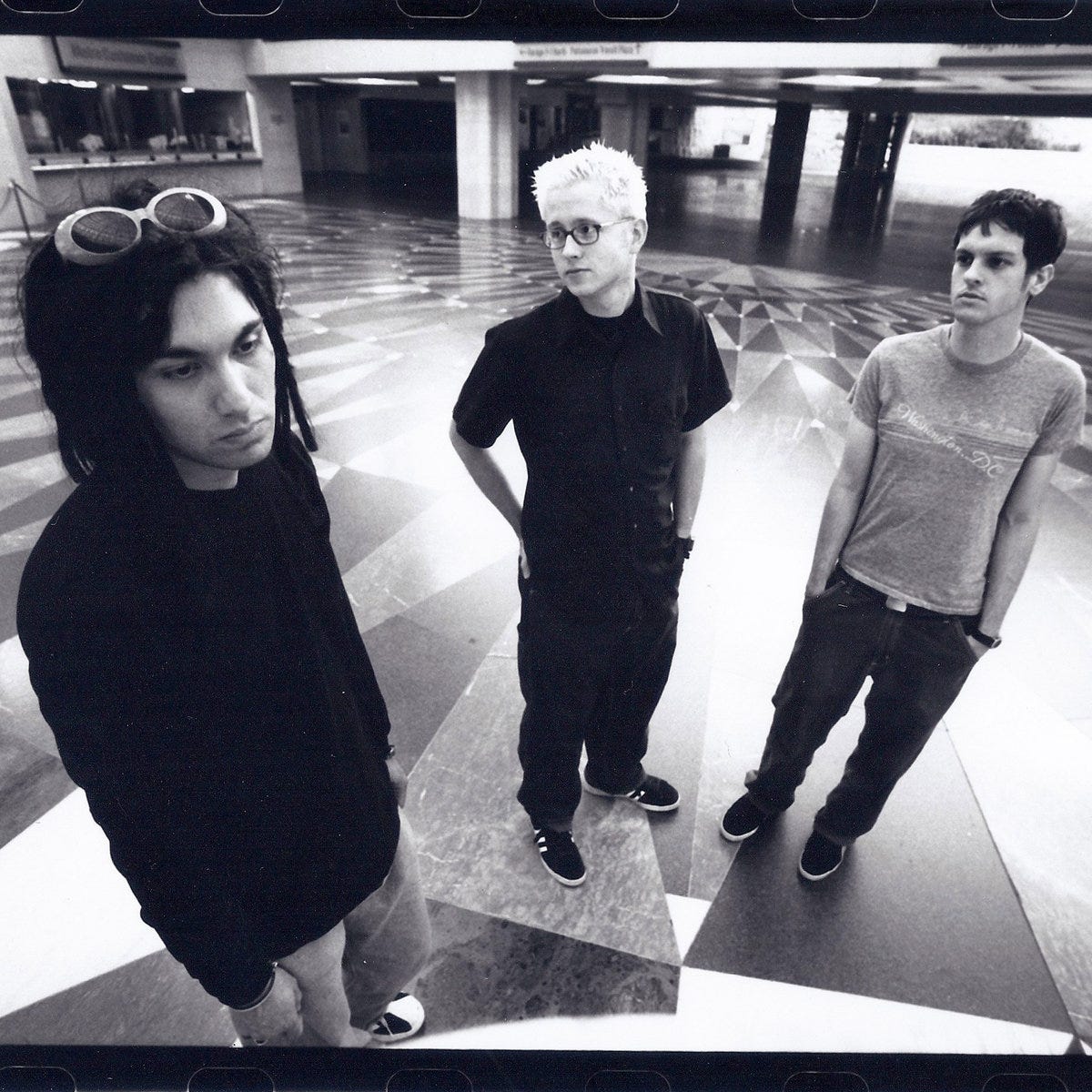
The Electronic Detour
Tinfed become less convincing when the electronic tools stop supporting the song and start competing with it.
“Never Was Sure” veers toward a trip-hop-adjacent mood, while “Halo” reaches for a fuzzier industrial weight. “Idol” pushes its digital elements even harder. None of these songs are disasters, and “Halo” in particular has a chorus with real appeal, driven by big drum hits and simple ascending and descending guitar movement. But the middle of the album is where the record starts to lose its center.
The problem is not that electronic music and rock should stay in separate rooms. By 2000, bands like Garbage had already proven how naturally guitar rock, programmed beats, and studio manipulation could coexist. The Smashing Pumpkins had also pushed hard into a more synthetic direction on Adore. Tinfed were not behind the curve for trying.
They just sound strongest when rock remains the foundation and electronics provide the strange light around the edges.
There is a difference between using a digital rhythm to complicate a groove and letting the digital rhythm become the entire song’s personality. On the weaker detours, the sound sometimes drifts toward second-tier industrial rock, closer to a less memorable God Lives Underwater B-side than a fully realized Tinfed statement.
That does not erase the ambition. In some ways, it makes the album more revealing. Tinfed were testing every door available to an alternative band at the turn of the millennium. They just did not always know which door led to their own room.
A Band One Album Away?
Tried + True feels like a record from a band that might have been one album away.
Not one song away, necessarily. There are enough good songs here to build a persuasive alternate version of the record. But one more cycle, one more chance to refine the hooks, tighten the arrangements, and decide exactly how much electronic experimentation served the band’s identity could have made a real difference.
The community heard more than potential. Our listeners voted it a Worthy Album, while we landed on a more selective verdict. That split makes perfect sense. This is exactly the kind of record that rewards a listener willing to meet it halfway. Its flaws are audible, but so is its personality.
Would a clearer mix have turned “Immune” into the breakthrough song? Could “Way Thru,” “Drop,” and “It’s Late” have found an audience if the band had been marketed less like another oddity on Hollywood’s roster? What does a better, tighter version of this album sound like? And does the messiness become part of why it sticks with you?
Listen to the full episode for our final verdict, then drop a comment with your own Tinfed ranking. Are you with the community, or are you building the shorter, sharper version of Tried + True in your head?
Episode Highlights
03:06: Tinfed and Tried + True, Chris’s latest community pick lands in our inbox
05:30: Hollywood Records, why Tinfed’s major-label home was such a weird fit
12:28: “Sci-fi pop,” the layered sound that makes the record feel like early-2000s future rock
16:02: “Way Thru,” “Immune,” and “Drop,” the album’s strongest opening run
22:04: Production problems, muddy mixes and hooks that need one more push
23:42: “Halo,” “Never Was Sure,” and the electronic middle stretch
31:39: Ed Buller, Britpop connections, and the mystery behind Tinfed’s drum treatments
36:38: Final verdict


