



Board of Directors member, Keith Tasker, brought us Fields of the Nephilim, and specifically their 1990 album Elizium, for his second Dig Me Out visit of the year. This was a record new to both of us, a strange and beautiful collision of goth rock, progressive atmosphere, Spaghetti Western imagery, mysticism, and late-period Pink Floyd-scale production. It is also exactly the kind of album that makes the whole Dig Me Out exercise worthwhile: a record that looks forbidding from the outside, then pulls you into its own weather system.
Want to bring YOUR favorite lost album to the table? Suggest it for a future episode or community poll.
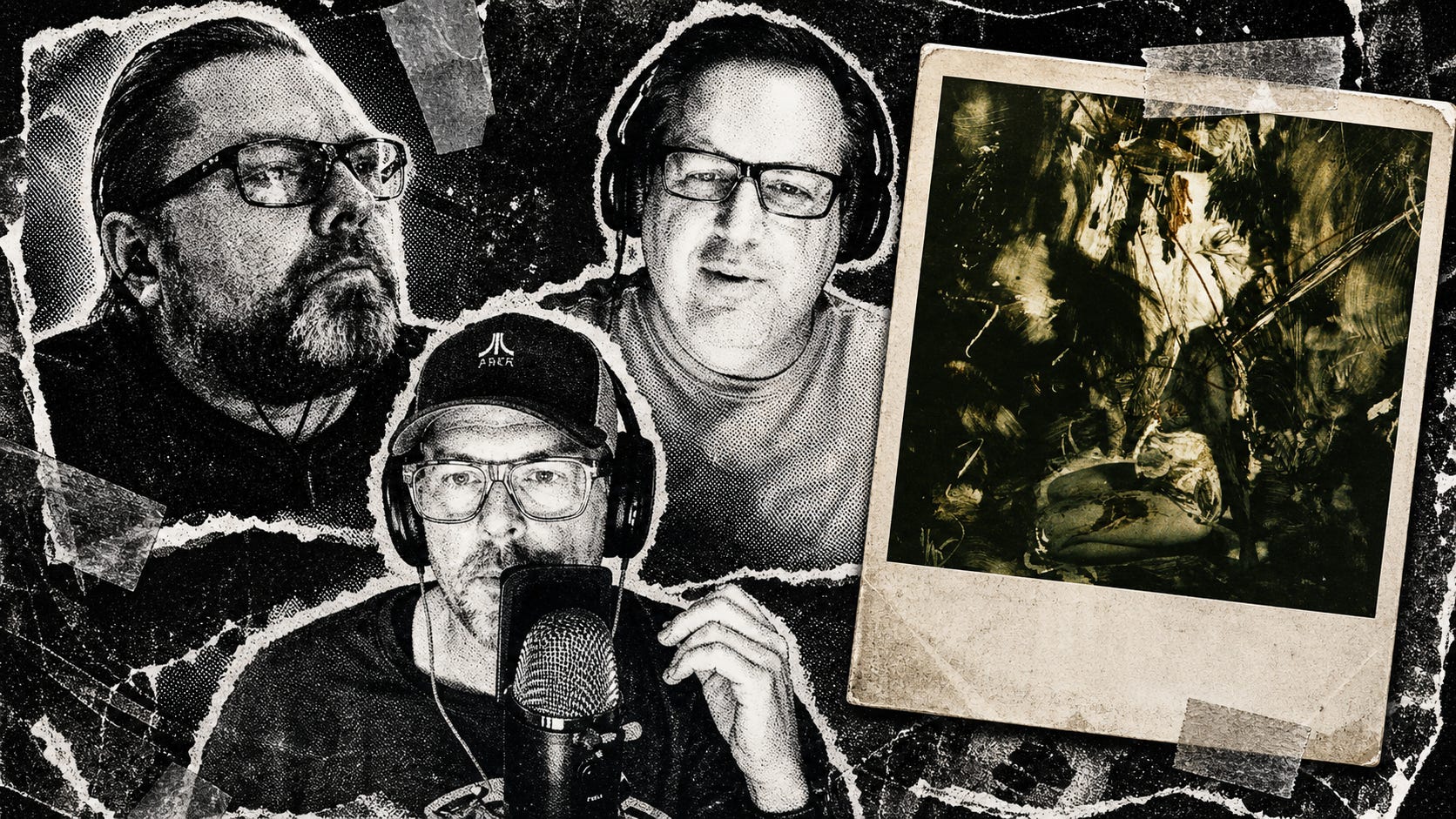
What if gothic rock’s grandest record arrived just arrived at the wrong time?
Released on September 24, 1990, Elizium was the third studio album from English goth-rock institution Fields of the Nephilim. It came out through Beggars Banquet, was co-produced by the band and Andy Jackson, and landed at the exact moment popular rock was about to be rewritten. Within a year, the old map would be burned up by Nirvana, grunge, alternative radio, and a much different idea of what darkness in rock music could sound like.
But Elizium lives in the gap before all that. It belongs to a 1990 when a band could still make a long, deeply theatrical record that asks for patience, headphones, darkness, and maybe a country road after midnight.
The Darkest Record Without Punishment
The surprise is how inviting this album is.
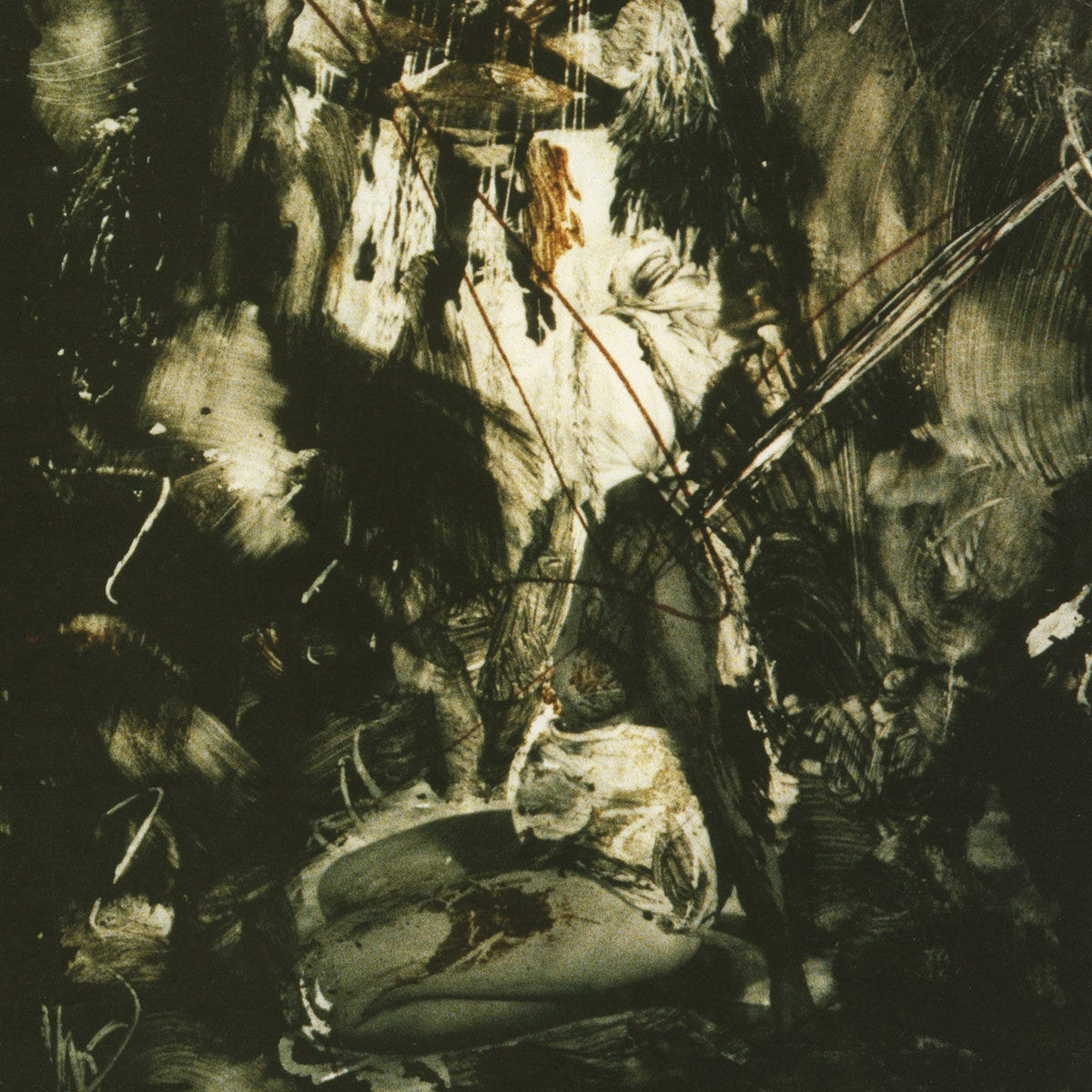
The cover, the name, and titles like “(Dead But Dreaming),” “Submission,” and “Sumerland (What Dreams May Come)” announce something ominous. Before hearing a note, we expected any number of directions: black metal, industrial, doom, perhaps some kind of impenetrable occult-rock exercise.
Instead, Elizium comes in with atmosphere, melody, dynamics, and an almost disarming beauty. The album’s darkness is never merely punitive. It does not bludgeon you, nor does it rely on extreme vocals or a wall of distortion to create dread. It pulls you closer.
That difference matters. The record’s most powerful quality is its ability to feel foreboding while remaining accessible. There are reverbed guitars, deep bass, synth haze, chant-like passages, whispered textures, and a voice that seems to rise from somewhere below the floorboards. Yet the songs are built around rhythms and melodies sturdy enough to keep us from getting lost in the smoke.
At the center is Carl McCoy, whose low, gravelly vocal brings the record’s mystery into focus. His performance is more than gothic crooning. He whispers, rasps, declaims, recedes, and periodically makes spoken passages feel genuinely weighty instead of theatrical for its own sake. Strip that voice away, and the music might still be beautiful. But it would not carry the same sense of danger.
The band’s reputation for dust-coated Spaghetti Western imagery, occult symbolism, Biblical reference points, and old-world mysticism can make them seem like an acquired taste. On Elizium, though, the imagery becomes part of the music’s physical space. You do not need a glossary of Sumerian mythology to feel what it is doing.
You only need to be willing to let it take over the room.
Goth Rock Went Cinematic
This album is less a collection of songs than a place to enter.
The official track list is just eight pieces, but Elizium is sequenced like one long, three-act experience: “(Dead But Dreaming),” “For Her Light,” “At the Gates of Silent Memory,” “(Paradise Regained),” “Submission,” “Sumerland (What Dreams May Come),” “Wail of Sumer,” and “And There Will Your Heart Be Also.”
The first stretch establishes the terrain. “(Dead But Dreaming)” is a brief threshold, an ambient opening scene rather than a conventional song. Then “For Her Light” arrives with a bracing, almost unexpectedly direct momentum. There are hints of 1980s-era Rush in the reverbed guitar attack and bass movement, even as McCoy’s voice immediately puts the music somewhere much darker.
From there, Elizium expands rather than repeats. “At the Gates of Silent Memory” pushes the record into a more patient and immersive mode, and “(Paradise Regained)” functions like another passageway. The band is not chasing choruses or radio hooks. They are building a sequence of rooms.
That is why calling it a full-album listen is not snobbery. It is practical listening advice. Starting at track four is a little like walking into a film halfway through and wondering why everyone is speaking in symbols. The record’s drama comes from accumulation: guitar tones bleeding into keyboard tones, drums pushing forward then disappearing into atmosphere, phrases returning in altered form.
The second half makes that structure even clearer. “Sumerland (What Dreams May Come)” runs more than 11 minutes, but it earns the length by shifting internal gears. There is a riff that evokes Eagles’ “Life in the Fast Lane” if it had been dragged through a fog machine and abandoned at the edge of an ancient temple. Then the song opens into something bigger, including a guitar solo with a flash of classic 1980s hard-rock excess.
That is the appeal of Fields of the Nephilim. They can make the sacred and the ridiculous touch shoulders without collapsing the mood.
The Pink Floyd Connection Is Real
The production is not merely “very 1990.” It is the sound of a band using that era’s tools to create a permanent fog.
Elizium was co-produced and engineered by Andy Jackson, whose long association with Pink Floyd explains some of the record’s scale, depth, and carefully layered ambiguity. Jackson’s work gives the album a strange physical character. A sustained sound might be guitar, synthesizer, or an EBow, the electromagnetic device that creates a bowed, sustained guitar effect. Sometimes it is hard to tell, and that is precisely the point.
The album was recorded at Park Gate Studios in Battle, with additional recording and mixing at Astoria, David Gilmour’s houseboat studio at Hampton Court. That detail makes sense the minute you hear the record. Elizium is not attempting to mimic Pink Floyd, but it shares a willingness to make studio technique part of the storytelling. discogs
The reverb, delay, and wide-open spaces initially read as a very specific 1990 production fingerprint. On a first spin, parts can feel thin or washed out, especially if you are listening casually or at low volume. Turn it up, though, and the mix begins to reveal why it was constructed this way. The effects are not decoration. They are the atmosphere itself.
A more forceful remaster might make the entry point easier. At the same time, drying this album out or trying to make it overly punchy would risk ruining its spell. Elizium needs its blur. It needs the sense that the band is playing somewhere just out of view.
It is a record that rewards an actual listening environment: speakers with some air around them, headphones that can handle the low end, or a long nighttime drive when the headlights only reach as far as the next patch of fog.
The Last Great Goth Holdout
By 1990, many of goth’s most important bands were moving elsewhere. Fields of the Nephilim doubled down.
The group emerged in Stevenage, Hertfordshire, in 1984, during a period when the roots of goth rock were already branching out in several directions. Bauhaus had fractured, with members moving into Love and Rockets and solo work. The Cure had become increasingly expansive and pop-facing. Siouxsie and the Banshees were evolving beyond any fixed genre label. The Cult had transformed from their Southern Death Cult beginnings into a much more hard-rocking machine.
Fields of the Nephilim did not exactly preserve goth in amber. They made it bigger, stranger, and more progressive. Their sound had hard-rock muscle, ambient patience, post-punk tension, psychedelic color, and the kind of theatrical commitment that could become laughable in lesser hands. Somehow, on Elizium, it never does.
It helps that the band was fully committed to the mythology. The songs invoke Biblical, occult, mystical, and Sumerian imagery. The band’s visual world brought together dusters, flour-covered faces, dark cowboy silhouettes, and a Sergio Leone-like sense of desert ritual. McCoy even appears in Richard Stanley’s 1990 cyberpunk film Hardware, wearing what was essentially his stage persona on screen.
That total commitment is a big part of why the album works. Fields of the Nephilim were not trying to sell us an attitude for a single cycle. They had built a world and were still living in it.
The American market largely missed them. But their influence is easier to hear in hindsight, in later gothic rock, darkwave, industrial, black metal, and even strands of emo that treated atmosphere as something more than an intro before the chorus arrives.
The Beautiful Problem With Elizium
The album’s greatest strength can also be its barrier.
There is no easy single to grab the first-time listener by the collar. “For Her Light” and “(Paradise Regained)” have more immediate propulsion, but Elizium is not designed as a playlist machine. It asks for a full immersion, which means it can take time to find its way in.
That also makes the long closing stretch a challenge. “Wail of Sumer” and “And There Will Your Heart Be Also” create a nearly 14-minute final descent, with a persistent bass foundation and a deep commitment to repetition. If you are locked into its mood, the effect is hypnotic. If you are evaluating each section for a new hook, tempo shift, or payoff, it can feel like the record is asking you to float a little longer than you planned.
The production has a similar tradeoff. Its haze is a feature, not a flaw, but it may initially sound distant or thin to listeners raised on hyper-compressed modern rock records. This is not gym music. It is not ideal for scanning tracks while doing something else. It rewards volume and attention.
The community response captured that tension well. One listener heard “heavy goth storytelling,” another compared the production atmosphere to Joy Division’s Closer with a touch of Queensrÿche, and another loved the album while admitting that 30 minutes at a time might be enough.
That is an honest reaction. You may not play Elizium every day. But when you want an album to turn the lights down and turn the world sideways, few records do it better.
Worth Entering the Fog
Elizium is the kind of overlooked record that makes our usual categories feel too small. It is a gothic rock album, certainly, but it is also a progressive rock suite, a dark ambient experience, a late-1980s production artifact, a headphone record, a Halloween record, and a reminder that 1990 held more possibilities than the history books tend to admit.
For longtime fans, this has often been treated as Fields of the Nephilim’s masterpiece. For us, it was a genuine discovery, especially because it found a way to feel ominous without becoming oppressive. The atmosphere is dense, but the record has air in it. The vocal is unmistakable, but the instrumental work is equally essential. The mysticism is everywhere, but you never need to decode every reference for the mood to land.
So the real questions are these:
Does Elizium work as one continuous experience, or do you need a few standout tracks to come back to?
Is this the perfect entry point to gothic rock, or too deep into the fog for a newcomer?
Does the 1990 production sound dated, timeless, or somehow both?
And which Fields of the Nephilim album should we hear next: Dawnrazor, The Nephilim, or something later?
Listen to the full episode for our final verdict, then tell us where Elizium takes you in the comments.
Episode Highlights
00:00:46: Keith Tasker returns with his pick, Fields of the Nephilim’s Elizium
00:02:10: Nephilim mythology, occult imagery, and the band’s theatrical foundations
00:04:38: Carl McCoy in Hardware, plus the band’s cinematic Spaghetti Western visual world
00:06:05: Andy Jackson, Pink Floyd connections, and why the production feels so enormous
00:07:30: Jay and Tim go in cold, expecting metal or industrial and finding something else
00:09:38: Why Elizium works as three movements instead of eight conventional songs
00:15:39: What works, accessible darkness, Rush-like guitar textures, and McCoy’s voice
00:20:26: A beautiful, ethereal, enveloping headphone record
00:26:38: Keith explains why this is an album experience, not a track-picking record
00:30:09: Aleister Crowley, Hardware, Richard Stanley, and the larger Nephilim universe
00:34:19: What does not work, thinness, reverb, and the challenge of the extended finale
00:42:20: The record as a three-part journey through death, submission, and acceptance
00:45:12: Final verdicts, three worthy albums and one lifelong obsession
00:47:53: Why Elizium belongs on the ultimate Halloween playlist


