



Our latest community poll dragged an out-of-print 90s curiosity back into the light: the lone self-titled album by Replicants, released in 1995 on Zoo Entertainment and long absent from streaming services. A supergroup built from members of Failure and Tool plus future Guns N’ Roses keyboardist Chris Pitman, Replicants took on a tracklist of covers that ranged from Paul McCartney and John Lennon to David Bowie, T. Rex, Gary Numan, and Pink Floyd. It was resubmitted to our April poll after losing once before, then finally won, so we dove in to figure out whether this cult favorite is a worthy 90s artifact or just candy for Failure obsessives. Want to bring YOUR favorite lost album to the table? Suggest it for a future episode or community poll.
Replicants sound like a bootleg transmission from the 90s alternative multiverse. A Cars single, a Wings hit, a T. Rex deep cut, and a Pink Floyd obscurity all get dragged through the same dense, space-rock filter that Failure perfected on Fantastic Planet. The result is a record that feels less like a casual covers project and more like a glimpse into a path the members never had time to fully explore.
The band that almost was
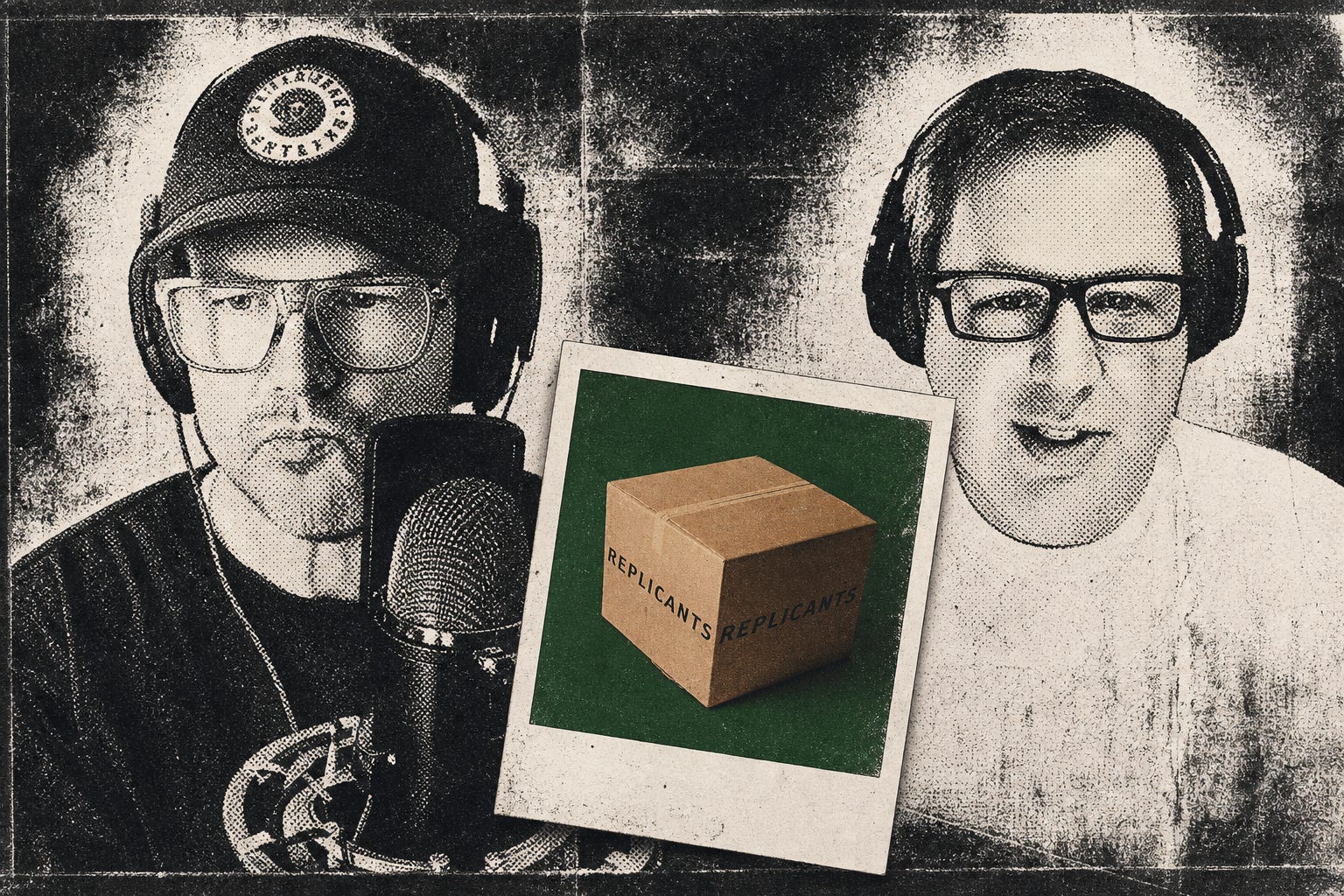
Replicants were a side project made up of Ken Andrews and Greg Edwards of Failure, Paul D’Amour right after his exit from Tool, and Chris Pitman, a player who would go on to work with Guns N’ Roses, Blinker the Star, and the psychedelic project Lusk. The plan, at least at first, was to be an original band, a fun outlet outside the high-pressure worlds of Fantastic Planet and Undertow. The original material never quite came together, schedules got chaotic, so the group pivoted to something they could do quickly and enjoyably: a covers album built from songs they already loved.
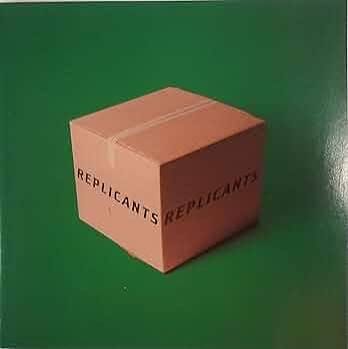
Released in November 1995 on Zoo Entertainment, the label that also handled Failure, Tool, Matthew Sweet, and Green Jellÿ, Replicants arrived in the middle of peak 90s alt-rock saturation. The band name itself nods to Blade Runner; replicants are the artificial humans Harrison Ford’s character hunts, and there is a certain sci‑fi chill in how this record reanimates classic songs inside a more mechanized, spacey frame.
On paper it looked like a cult hit waiting to happen: members from rising critical darlings, a tracklist that threaded classic rock radio, glam, and synth pop, plus a guest appearance by Maynard James Keenan singing “Silly Love Songs.” In reality, it came out, got some college radio love, spawned a “Destination Unknown” video, then quietly went out of print and never returned to streaming, likely due to the licensing mess of eleven different songwriters and publishers.
A covers album built like a Failure record
If you are a Failure fan, this record is immediate comfort food. The guitars have that thick, controlled crunch, the dynamics swell and collapse in familiar ways, and Ken Andrews’ voice sits right in the same dry, intimate pocket as it does on Fantastic Planet. The twist, and the reason this album is interesting at all, is that he is forced to inhabit melodies and phrasings he would never have written, which pulls the whole band into new shapes.
“Dirty Work,” originally by Steely Dan, is a good early example. The original has a breezy, almost cheery feel that hides its lyric about being used; here, the band leans into more melancholy guitar voicings and a heavier rhythmic pulse, though the vocal melody stays close enough that you still feel the song’s soft-rock DNA. It is not a radical reinvention, but it does feel like a Failure song cosplaying as Steely Dan, slightly sadder and more resigned.
The glam detours are where the project gets more interesting. “Life’s a Gas,” a lesser-known T. Rex tune from Electric Warrior, slows into a patient, textured space where the band’s love of syncopated picking, layered guitars, and ambient swells fits naturally. “The Bewlay Brothers,” a deep cut from David Bowie’s Hunky Dory, becomes the most ambitious piece here, stretching out past seven minutes and building strings, horns, and atmosphere into something that feels only half like a Bowie cover and half like a new entry in Failure’s catalog.
You can hear Chris Pitman’s presence most clearly on the synth-forward tracks. “How Do You Sleep?,” John Lennon’s famously venomous answer to Paul McCartney, morphs into a Depeche Mode‑adjacent synth piece with a dry, close-miked drum and bass section late in the song that feels like something off Off the Wall in terms of tone and tightness. “Are ‘Friends’ Electric?,” originally by Tubeway Army and Gary Numan, lands almost too close to its 1979 blueprint, but it does underline how comfortably the Failure sound could have lived in late‑70s synth pop.
The emotional center, though, is “Silly Love Songs.” Written by McCartney as a response to Lennon’s digs on “How Do You Sleep?,” it becomes something darker and more threatening in Replicants’ hands, especially when Maynard’s voice slides in. Parts of the arrangement feel like a horror movie trailer version of Wings, with the “I love you” section slowed and stretched until it feels menacing instead of goofy. It is a reminder of how easily affectionate pop can be turned into something unnerving with just a change in tempo, tone, and harmony.
Where the covers crack
The hardest part about reviewing a covers album is untangling your relationship with the originals. On Replicants, that tension is baked into almost every track, and it sometimes works against the record.
“Cinnamon Girl,” from Neil Young’s Everybody Knows This Is Nowhere, is the clearest miss for us. The band nails a modernized version of Young’s metallic, crude guitar tone while filtering it through Failure’s more processed sound, but the arrangement hugs the original so tightly that it raises the recurring question: why listen to this instead of going back to Neil. The added handclaps in the chorus give it a surprisingly cheery feel that fights against the heaviness of the riff, and nothing in the vocal or harmony choices reframes the song.
“Destination Unknown,” a Missing Persons single, was reportedly picked as the radio track and got an actual video. Hearing it now, that choice feels like a label move; the Replicants version leans into drum machines and a Nine Inch Nails‑style groove in a way that sands off the organic drum feel that makes Failure’s own catalog so alive. It is easy to imagine someone at Zoo thinking they were getting their own “Closer” moment in 1995, but to our ears it ends up sounding like a slightly cheap NIN cosplay.
On the other end of the spectrum you have “Just What I Needed,” the Cars classic that opens the album. The band famously tweak the chord under the iconic keyboard melody, introducing a darker, diminished feel that can be genuinely jarring the first time you hear it. Once you know it is coming, that wrong‑footed chord becomes a feature rather than a bug, but it is a good example of how this record can oscillate between “clever reinvention” and “mildly irritating sabotage” depending on how much reverence you have for the original.
This tension runs through “Are ‘Friends’ Electric?” and “Ibiza Bar” as well, the latter a deep cut from Pink Floyd that already lived in a slow, spacey zone before Replicants got to it. When a band whose whole thing is atmosphere and space covers Pink Floyd, you risk stacking atmosphere on atmosphere without adding insight; the track works as textural album closer, but it does not fully answer the “why does this version need to exist” question.
Supergroups, side projects, and the weight of expectation
Part of the fascination with Replicants is how neatly it fits into the supergroup and side‑project boom. The episode compares it to acts like Audioslave and Velvet Revolver, where the member lineups promised a lot and the end result felt more “pretty good” than mind‑blowing. In hindsight, that might say more about our expectations than the music; it is incredibly hard for any band to live up to the fantasy version of “Failure plus Tool plus this other guy.”
In this context, Replicants make more sense as a pressure valve than as a grand artistic statement. You can hear Ken and Greg experimenting with synths and textures that would later surface in projects like On and Autolux, and you can imagine a world where Chris Pitman shows up as a live guest with Failure to add keys and atmospherics to a few songs. The record even nudges you to wish Failure leaned harder into these directions now and then, trading some of the guitar density for more off‑kilter synth and organ moments.
The practical reality, though, is that the album has been hard to hear for years. It is out of print physically and has never hit the major streaming services, which likely comes down to the time, cost, and sheer bureaucracy of clearing eleven covers across multiple labels and estates for a niche side project. The label was willing to roll that dice in 1995, when CD sales and college radio exposure might justify the hassle, but the calculus looks very different now.
Candy for Failure fans, a puzzle for everyone else
So where does Replicants land in 2026. Inside our little circle, we split between calling it a worthy album and trimming it to an EP. One of us could build an eight-song version that feels strong front to back, built around “Silly Love Songs,” “Life’s a Gas,” “How Do You Sleep?,” “No Good Trying,” “Dirty Work,” “The Bewlay Brothers,” “Destination Unknown,” and “Are ‘Friends’ Electric?.” Another would cut more aggressively, landing on a six‑song EP where “The Bewlay Brothers” and “Ibiza Bar” stand out precisely because they were not burned into our brains before this record.
Outside the Failure ecosystem, the value proposition is murkier. If you are not already tuned to their space‑rock frequency, do these versions help you hear McCartney, Lennon, Young, or Bowie in a new way, or do they just sound like well‑played 90s alt‑rock curios. How much should we expect a covers album to transform its source material before it “counts” as its own statement.
Critic and fan sentiment online tends to frame Replicants as an intriguing footnote, praised for its taste and mood, questioned for its inconsistency. Around our community, some voters called it “college radio gold” and held it up as proof of how creative the 90s could be when major labels gave weird side projects a budget. Others found it less compelling than the sum of its parts, especially compared to the core catalogs of Failure and Tool.
We keep coming back to a few questions that feel worth handing to you:
Which covers here actually change how you hear the original song, and which ones are just alternate skins.
Does a covers record by a band like this need to be great to justify its existence, or is “fun experiment” enough.
If you are a Failure fan, does this make you want them to stretch further into synths and glam textures on future records.
And in an era where this album is hard to access, how much does scarcity itself color your perception of its value.
Listen to the full episode for our detailed breakdown, track by track nerding out, and final rating, then drop a comment and tell us which song you think they absolutely nailed and which one they never should have touched.
Episode Highlights
00:18: Poll setup and the April ballot, explaining how Replicants won after losing a previous round and what that says about persistence in our community.
05:53: Introducing Replicants as a Tool and Failure side project, breaking down the lineup and how the band came together mid‑Fantastic Planet.
11:07: Context on Zoo Entertainment, Maynard James Keenan’s guest spot on “Silly Love Songs,” and the decision to push “Destination Unknown” as the single.
19:59: Community comments on the poll, from “Replicants all day” to doubts about supergroups and cover albums in general.
1:41:19: Deep dive on “Silly Love Songs” and “How Do You Sleep?,” exploring how the band reframes the Lennon–McCartney feud in a darker, more menacing way.
2:02:38: The glam and Pink Floyd moments, discussing “Life’s a Gas,” “The Bewlay Brothers,” and “Ibiza Bar” as the album’s most ambitious, space‑rock‑leaning tracks.
2:45:22: Final verdicts: album vs EP, who this is actually for, and why it remains out of print and off streaming.


