




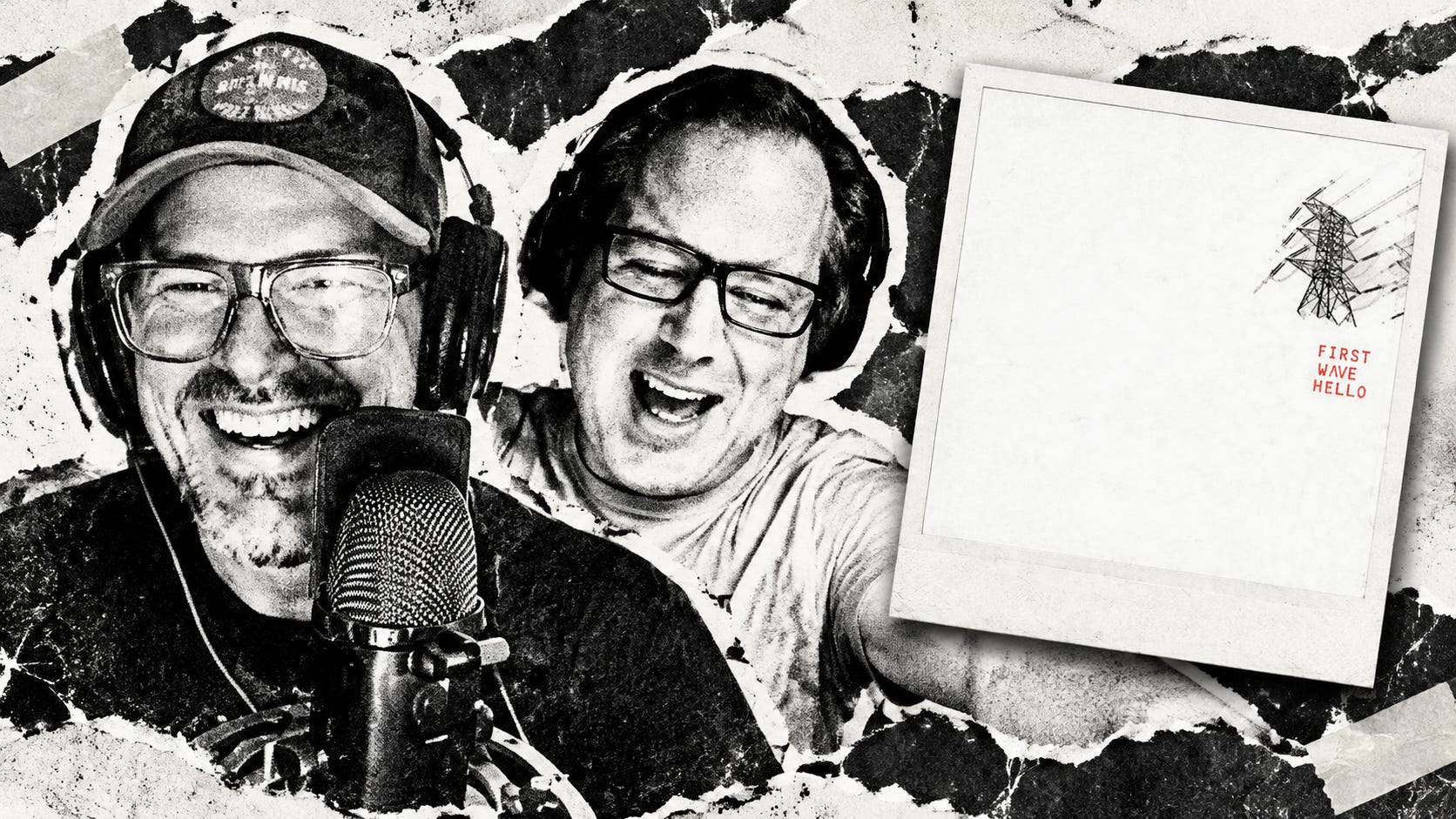
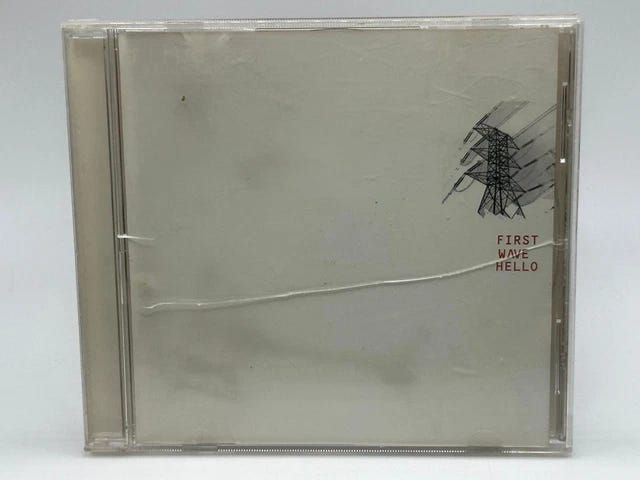
Longtime Board of Directors member Jim Stelter brought First Wave Hello and their 2006 album The Lord & its Penguin to our table. Neither of us knew it, which became harder to explain the longer we listened. Want to bring YOUR favorite lost album to the table? Suggest it for a future episode.
How did a record this close to our tastes get past both of us?
We were looking. That’s the part that bothers us.
In 2006, we weren’t taking a break from music or waiting for somebody to hand us a playlist. We were making records, buying records, reading about records, and following the little trails that led from one band to another. An unfamiliar name attached to a familiar sound was practically an invitation.
Yet this one never arrived.
Now we have a San Diego band with huge guitars, restless keyboards, an artier strain of emo in the vocals, and a mix by Ken Andrews. For two people who love Failure, that last detail makes the omission feel almost personal.
A Familiar Name and an Unfamiliar Band
The Andrews connection gives us a way into the record but It doesn’t explain everything inside it.
First Wave Hello formed in San Diego in 2004, initially exploring an experimental electronic direction. Their first full-length arrived in 2006, with Andrews involved in its production history and specifically credited by the band as mixer. William Nephew and Christian Cummings handled recording. Those distinctions matter, because hearing a familiar sonic signature isn’t permission to assign one person every decision on an album.
Still, we understand why the Failure comparison comes so quickly.
The drums sound enormous. The guitars occupy real space. Dissonance appears, but it doesn’t turn the whole picture into a blur. We can hear the layers even when we can’t immediately identify which instrument is making a particular sound.
That relationship extended beyond the mixing desk. First Wave Hello later opened for Andrews on his solo tour and served as his backing band.
What surprises us is how accomplished the record sounds given its independent origins. A recognizable mixer can sharpen a band’s identity but the identity still has to be there.
On this record, we keep finding it in the keyboards.
The Keyboards Are Fire
Take the synths away and we would be discussing a different band.
That’s our strongest response to The Lord & its Penguin. The guitars are substantial, sometimes huge, but the keyboards determine how the music moves around them. They add grit beneath the low end, stretch a passage into something more expansive, or introduce an unfamiliar noise that changes the emotional temperature.
We hear some of the art-rock side of emo in the vocal delivery, closer in spirit to Cursive or No Knife than a straightforward confessional approach. But the instrumental setting keeps pushing the record toward space rock. That tension gives it character.
The impressive part is the band’s ability to choose sounds that belong together.
We’ve messed around with keyboards enough to appreciate how easily a part can feel pasted onto a rock arrangement. A patch jumps out for the wrong reason. A piano suddenly changes the entire atmosphere. A synth competes with the guitar instead of extending it.
Here, we hear tones meeting at the edges. Is that roughness coming from the bass, a keyboard, or a guitar effect? Sometimes we can’t tell and that’s why it works.
The result can feel polished and strange at once. We don’t get the sense that every abrasive sound has been removed. Instead, the abrasive sounds have been given somewhere to sit. The mix lets the band be dense without making density the only thing we notice.
Slow Songs With Something Moving Inside Them
“Our Best Policy” doesn’t need speed to feel powerful.
Its kick and snare give us that slow, booming momentum we love in this kind of music. There’s weight behind the beat, but there’s also movement.
“Everything Automatic” offers a different kind of interruption: a keyboard sound that suggests a warning alarm. It’s a small detail with a big effect. Just when we think we understand the record’s palette, something cuts across it.
That matters because so much of the album lives in a mid-tempo range. Leaving space can expose an arrangement’s weaknesses. Here, the keyboards often make that space worth listening into.
Sometimes they supply the central melody. Sometimes they answer another instrument. Sometimes they become the floor underneath everything else.
“Lay Down” pulls the sound toward a more restrained, atmospheric setting. We hear a connection to National Skyline, particularly that meeting of electronic and organic textures. Elsewhere, the breadth suggests Hum, while a few sharper electronic edges bring Nine Inch Nails into the conversation without turning this into an industrial record.
The attraction is in those changes. We aren’t waiting only for a chorus. A repeated keyboard figure or an unexpected sound is the thing that brings us back.
Jim’s pick changed what we made this week. If you want a hand in future episodes, join the community: paid members vote in album polls, and the winner becomes a full podcast episode.
We Were Looking for This. We Still Didn’t Find It.
The frustrating thing about rediscovery is realizing you would have loved the discovery sooner.
We keep coming back to 2006 because this record doesn’t sound like something that required us to develop entirely new tastes. We already had the reference points. We were already interested in heavy, atmospheric rock and bands finding ways to combine electronics with guitars.
Our routes into music were different. There were record-store listening booths. There were magazines, iTunes, and eMusic. There were independent releases in our collections, not just whatever had the largest promotional budget.
So why didn’t this one reach us?
There may also be something in the music’s position between camps. It’s melodic, but not consistently built around immediate vocal hooks. It’s adventurous, but not always as strange as the more experimental records we were buying.
That leaves it in a difficult middle: accessible enough to suggest a wider audience, dense enough to ask that audience for patience.
When the Atmosphere Starts Asking Too Much
A beautiful sound can still wear out its welcome.
Our biggest criticism isn’t that the album contains songs we hate. But enjoying the ingredients doesn’t guarantee attention across the full 58 minutes.
The density accumulates. So do the introductions.
We start noticing a pattern: a small rhythmic entrance, a passage that feels like a preliminary verse, and then the song properly getting underway. Used once, that can create anticipation. Repeated across a stretch of an album, it can make us wish the band would occasionally just open the door and walk in.
There’s a sequencing issue, too. The more immediate hooks seem concentrated toward the front, while the record grows more demanding as it continues. That’s a legitimate artistic choice. It also means the listener’s job gets harder rather than easier.
“Nothing Like Nausea” lifts the tempo, but it doesn’t fully supply the bruising change of pace we find ourselves wanting. One really direct, louder, heavier song might have altered the album’s proportions.
A headphone record can reward concentration and still test it. Both things can be true. That’s where this conversation gets more interesting than simply praising the mix.
The Verdict: How Much Immersion Is Enough?
The element we love most is also the element that divided our community.
One listener came to the band through the Andrews connection and embraced the record. Another found the vocal treatment and abundance of synths difficult to stay with. Sometimes the sound itself is the obstacle.
Where does it land for you?
Listen to the full episode for our verdict and the community results, then drop a comment with the song that makes your case. Join the community to help decide future coverage. In our album polls, paid members choose the winner that becomes the next full episode and feature.
Episode Highlights
01:44: Jim’s patron pick, the unfamiliar band that lands squarely in our listening wheelhouse
03:21: Ken Andrews connection, why the mixing credit immediately catches our attention
04:37: Community reactions, the synth-heavy sound wins an advocate and loses another listener
06:47: Keyboards as architecture, the tones that give the album its identity
12:09: Our Best Policy, slow drums with weight and forward motion
13:00: Everything Automatic, an alarm-like keyboard sound disrupts expectations
19:06: Lay Down, electronic and organic textures bring National Skyline to mind
21:58: Density and repetition, when the introductions start testing our attention
24:39: Nothing Like Nausea, a tempo change that doesn’t quite supply the desired release
28:13: Independent ambition, accomplished sound without a conventional label launch
30:25: The 2006 blind spot, how a record this compatible with our tastes escaped us
35:00: Final verdict, our assessments and the community results


