



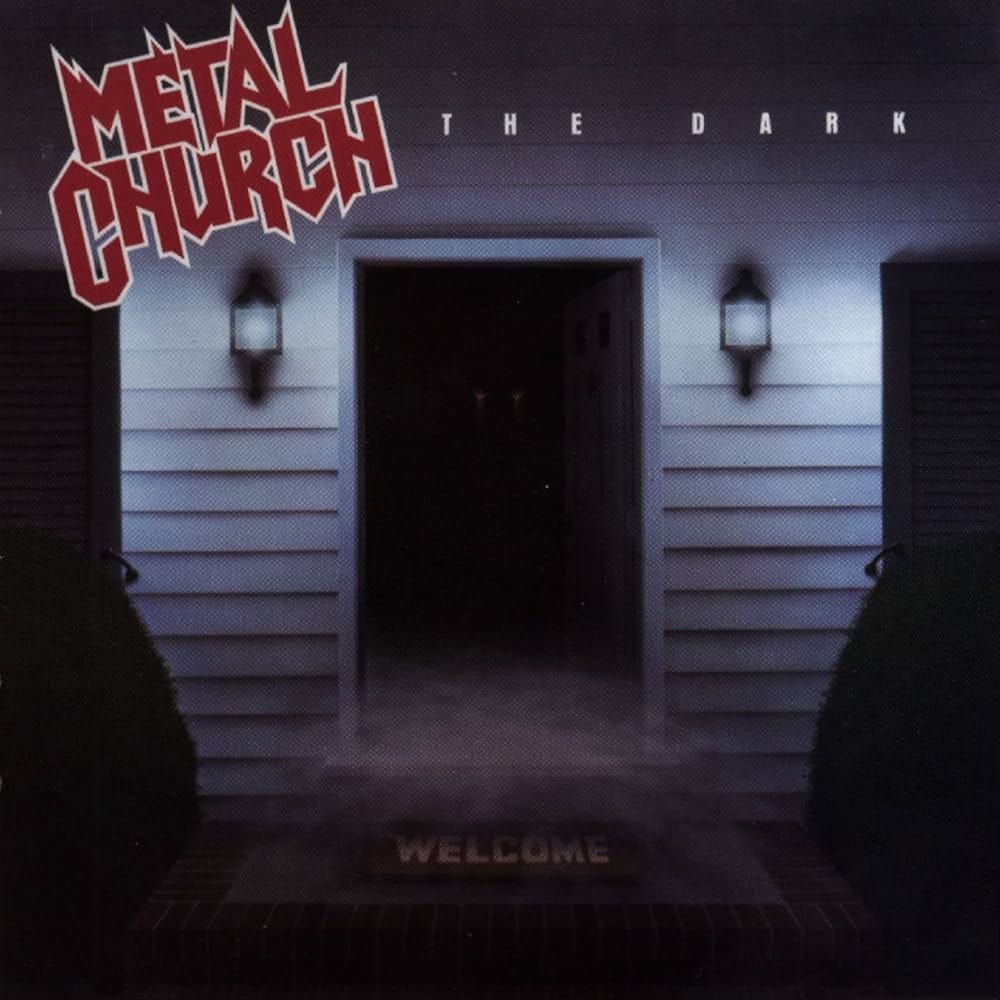
The Dark earned its place on the turntable the way all our episodes do: through community vote. It pulled 47% of votes, beating out Fastway, early Pantera, and Metallica to claim this week’s dig. If you have an album you think deserves a closer listen, suggest it here and let the community decide.
You toured with Metallica. You got MTV airplay. You peaked at #92.
So how does an album just disappear for nearly 40 years?
Metal Church released The Dark in October 1986, opened for Metallica, landed a video in heavy rotation, and spent 23 weeks on the Billboard 200. By any reasonable measure, they should have been a household name. They weren’t. They still aren’t. And figuring out why is exactly the kind of question this podcast exists to answer.
Origin Story
Kurt Vanderhoof formed Metal Church in San Francisco in 1980. The band relocated to Aberdeen, Washington the following year, making them an early fixture in the Pacific Northwest heavy metal scene before anyone outside the region was paying attention. Vanderhoof has been the sole constant in the band across every lineup change, every hiatus, every comeback.
By the time vocalist David Wayne joined and completed the classic lineup, something unusual was happening: this band from the Pacific Northwest was running in the same circles as the Bay Area thrash elite. They sold 70,000 copies of their 1984 self-titled debut independently before Elektra Records came calling. Lars Ulrich and James Hetfield reportedly urged Elektra to sign them before another label could. That is the level of peer respect Metal Church commanded in 1985.
The Dark followed in 1986, recorded with engineer Terry Date at the beginning of what would become one of the most consequential production careers in heavy music. It was released the same year as Master of Puppets. That timing is a large part of the story, as is Vanderhoof stepping back from live performance entirely after the album’s release, destabilizing the band at exactly the moment they needed to build on their momentum.
The Sound
What makes The Dark worth your time in 2025 is a combination no other band was quite pulling off in 1986: the aggression of thrash, the melodic instinct of NWOBHM, and the ambition of power metal, all occupying the same record without any of them canceling the others out.
The guitar work is the album’s backbone. Vanderhoof’s riffs carry a precision that owes something to early Metallica but a melodic sensibility closer to traditional British metal. The hooks feel structural, not grafted on.
Then there’s David Wayne. His range on The Dark is a genuinely underrated performance in 80s metal. He drops into guttural lows on “Ton of Bricks” and pivots to near-Bruce Dickinson territory without showing off. The voice carries information about the song’s emotional state. That’s rarer than it sounds.
The production is Terry Date’s earliest major work, and you can hear both its strengths and its limitations. There’s a Celtic Frost-ish doom atmosphere threading through several tracks, particularly the second side, that gives the album texture beyond pure thrash velocity. The drums, though, are coated in the period-typical reverb that dates the record more than anything else. The band themselves have since described it as “woefully over-produced,” and there’s something to that: the arrangements are sophisticated, but the sonics feel like they’re fighting the music.
The Songs
Side one is almost perfect. “Ton of Bricks” opens the record at a sprint and doesn’t waste a second of its 2:55. It’s the most unambiguous Metal Church statement on the album: direct, fast, no introduction needed.
“Start the Fire” is the track that shows off the band’s range most efficiently. The guitar hook in the chorus is the kind of thing you find yourself humming two days later without knowing why. “Method to Your Madness” stretches the arrangement further, pushing past four minutes with a tempo shift and a quiet section that proves these weren’t just speed merchants.
“Watch the Children Pray” is the outlier. It’s a genuine ballad, or as close to one as 1986 thrash metal was going to produce, with a half-tempo arrangement and a melodic shading that brings Queensrÿche to mind. That’s not a complaint. It’s the moment on the record that most clearly argues Metal Church were thinking beyond the genre’s conventions.
“Burial at Sea” closes the original side one with a driving momentum that’s hypnotic. There’s a cadence in the main riff that echoes Testament, a churning quality that keeps pressing forward even when the tempo shifts.
The second side is where the album loses some of its grip. “Psycho” is the track the band themselves point to as their most definitive statement, and it has its moments, but alongside “Western Alliance” it constitutes a stretch of the album that feels more generic than anything on side one. The hooks aren’t as sharp. The urgency softens. The title track itself is genuinely haunting, a slow-building, unsettling piece that justifies its placement as the album’s centerpiece, but “Psycho” and “Western Alliance” on either side of it don’t help it land with the weight it deserves.
The Context: 1986 and Why It Got Buried
Master of Puppets came out in March 1986. The Dark came out in October 1986. There is no version of that calendar year where The Dark doesn’t get swallowed by its shadow. Metallica were ascending toward cultural dominance. Every other band in the genre was operating under the same gravitational pull.
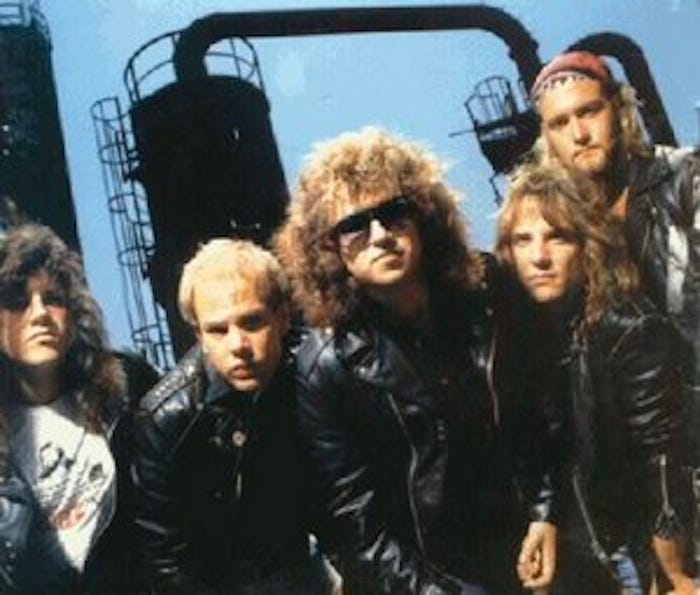
But Master of Puppets isn’t the only explanation. There was an image problem. AllMusic reviewer Eduardo Rivadavia described Metal Church in terms that were not kind to their visual presentation, and the band’s lack of a distinctive look in an MTV era was a real liability. They looked like five people who played in a metal band. That wasn’t enough in 1986.
The Metallica connection is real and documented, though not in the way the internet has claimed. There is a persistent rumor that Lars Ulrich tried out for Vanderhoof’s predecessor band Shrapnel before forming Metallica. Vanderhoof publicly debunked that story in 2016. The actual connection is better anyway: guitarist John Marshall, who became a member of Metal Church, filled in for James Hetfield on two separate occasions when James burned himself with stage pyrotechnics. That’s a footnote that runs through both bands’ histories like a quiet thread.
The Seattle Chapter Nobody Talks About
The story of Seattle in the 1980s is almost always told as a grunge origin story. What gets compressed into a footnote is the Pacific Northwest heavy metal scene that preceded Nirvana, Alice in Chains, and Soundgarden by nearly a decade.
Metal Church were part of that scene alongside Queensrÿche and Sanctuary. Three very different bands, same regional ecosystem. Queensrÿche were pushing toward progressive rock territory. Sanctuary, produced by Dave Mustaine, were the most overtly aggressive. Metal Church occupied the middle ground, combining thrash velocity with the melodic instincts that would later define power metal.
Terry Date, who engineered The Dark, also engineered Sanctuary’s Refuge Denied (1988). The fact that he went on to define the sonic character of grunge-adjacent metal with Soundgarden’s Louder Than Love and Badmotorfinger, then produce Pantera’s Cowboys from Hell, is not coincidental. He learned his craft in this ecosystem.
David Wayne died on May 10, 2005, from complications following a car accident. He was 47 years old. His death forecloses any reunion that might have brought renewed attention to the classic-lineup albums. Revisiting The Dark now carries that weight: this is the best work of a vocalist who is gone, on an album that never got the audience it was reaching for.
Verdict: Listen and Decide
The Dark holds a #389 ranking in Rock Hard magazine’s 500 Greatest Rock and Metal Albums of All Time. Encyclopaedia Metallum reviewers consistently treat it as a classic of the genre. Stone Sour covered the title track, which is how a generation of listeners first heard the song. The 30th anniversary threads on Reddit still turn up new fans who are stunned they went years without encountering this record.
So here’s what the episode asks: is the second half of The Dark a forgivable flaw in an otherwise essential album, or does it undermine the whole thing? Is David Wayne’s vocal performance here the equal of anything Bruce Dickinson was doing at the same moment? And what does it tell you about how musical canons form that this band, touring with Metallica, charting on the Billboard 200, landing videos on MTV, ended up as a deep cut?
Episode Highlights
Intro: Scene-setting and poll results context, how The Dark beat Fastway, early Pantera, and Metallica for the community vote
0:47: Poll Results: The Dark Wins at 47%: breakdown of the combined Patreon and Substack vote and why the margin surprised the hosts
6:08: Band Background: Metal Church origins in San Francisco, relocation to Aberdeen Washington, Vanderhoof as the constant creative force, the Elektra Records signing story
12:23: What Works: The Thrash-Meets-NWOBHM Sweet Spot: Jason’s overview of the album’s tonal range and why the combination of aggression and melody holds up
~13:30: Method to Your Madness: the tempo shift, the quiet section, and why this track shows the band’s range beyond pure speed
~15:00: Start the Fire: the chorus guitar hook and how it holds up as a melodic anchor on the record’s strongest side
~19:44: Watch the Children Pray: the genuine ballad argument, the half-tempo arrangement, and the Queensrÿche-adjacent shading that makes it an outlier
~22:00: Burial at Sea: the driving cadence, the Testament comparison, and why this track closes side one with such momentum
~22:30: The Dark: the title track’s haunting atmosphere and the creepy quality that justifies the album name
~23:00: Ton of Bricks: the case for this two-minute-fifty-five-second opener as the most efficient Metal Church statement on the record
29:09: Terry Date Connection: how the engineer of this record went on to shape the sound of Soundgarden’s Louder Than Love, Badmotorfinger, and Pantera’s Cowboys from Hell
33:14: The Lars Ulrich Rumor: Vanderhoof’s 2016 debunking of the Shrapnel audition story and the real documented Metal Church/Metallica connection through John Marshall
35:16: What Doesn’t Work: The Second Half Sag: Psycho, Western Alliance, the reverb-heavy drum sound, and the honest case that the album runs out of ideas before it runs out of songs
43:38: The Verdict: where all three hosts land on The Dark after working through every track and its context
49:08: Outro: Jay’s Operation Rock and Roll 1991 cassette sidebar (Metal Church, Alice in Chains, Judas Priest, Motorhead, Fishbone)
Subscribe & Connect
Join the Board of Directors at dmounion.com for to pick your album and join us on the podcast.
Have a lost or forgotten album that deserves the spotlight? Suggest it here.


