



This one came to life through listener democracy. A community of rock obsessives voted on four 70s albums in a head-to-head poll: Santana, Mountain, Babe Ruth, and the Sensational Alex Harvey Band. The result wasn’t close — SAHB walked away with 62.9% of the vote. Think you know a 70s, 80s, 90s, or 2000s album that deserves this treatment? Toss it in the hopper.
Nobody in America got the memo. Except Cleveland.
That’s the wildest part of the Next story. WMMS — the legendary Cleveland radio station that helped break Springsteen and Rush — threw the record on the air not because a label was pushing it, not because there was payola, but because a program director just liked it. They didn’t just play a single — within the first week of airplay, five tracks from Next became top requests. They played every track. Even “Gang Bang.” On the radio. And Cleveland lost its mind for this band in a way that the rest of the country just… didn’t.
Here’s how regional that obsession was: the majority of Next‘s US pressings were sold in Cleveland. People in the city genuinely assumed SAHB was huge everywhere. They weren’t. If you went to Cincinnati, nobody had a clue.
That’s the kind of story that should have you sprinting to your streaming app right now.
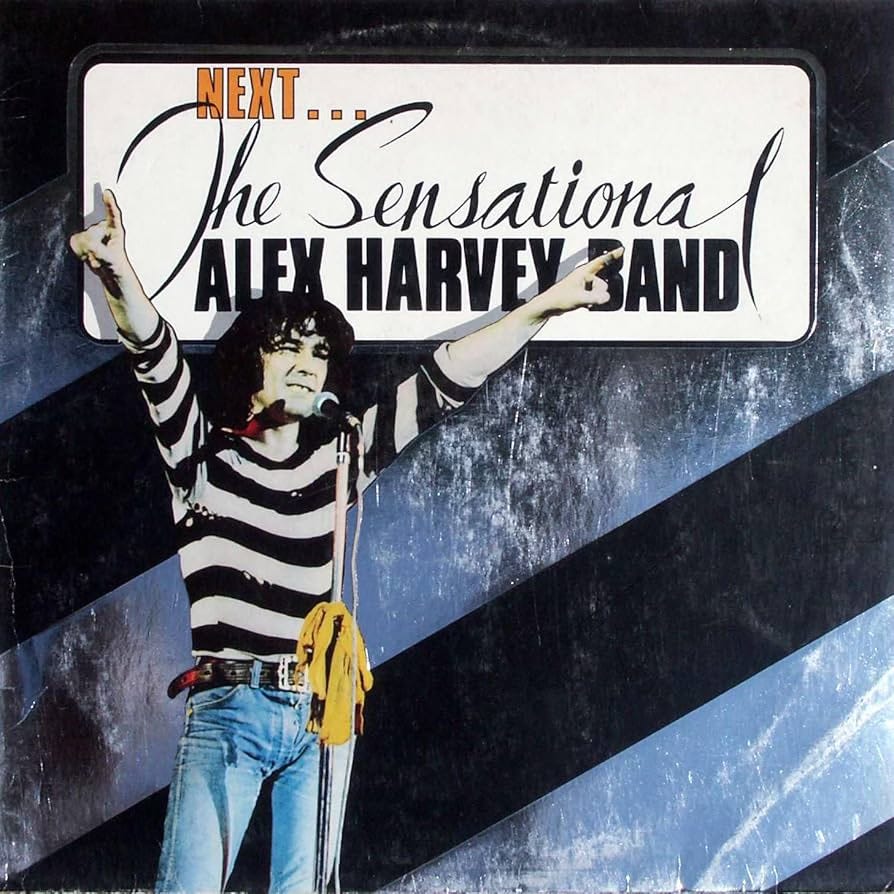
Who Was Alex Harvey, Anyway?
Here’s the thing — Alex Harvey wasn’t some wide-eyed kid chasing his first record deal when Next dropped. Born February 5, 1935, in Glasgow’s working-class Kinning Park district, Harvey had been grinding for nearly two decades by the time this album came out. He’d won a newspaper competition as “Scotland’s answer to Tommy Steele” back in 1957. He’d led the Big Soul Band through British ballrooms and the same Hamburg club circuit that built the Beatles’ reputation. He’d played in the pit band for the London production of Hair. By 1972, he was a seasoned road veteran on roughly his third band. That experience shows. This wasn’t a guy stumbling into ideas. These were choices. Very specific, very weird, very deliberate choices.
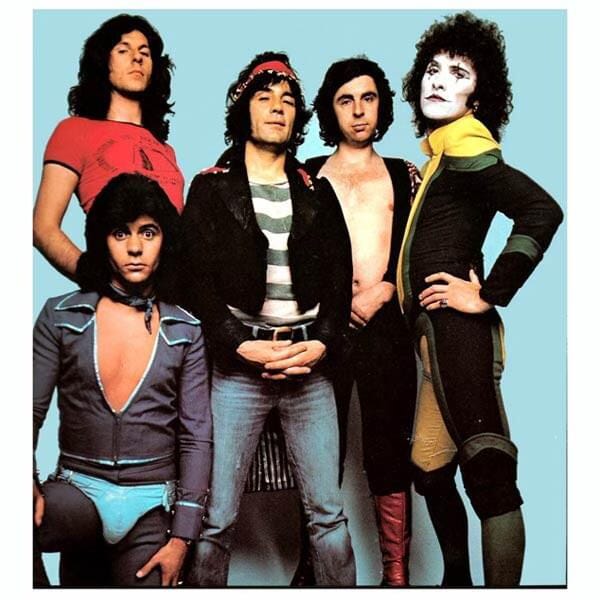
The Sensational Alex Harvey Band came together in 1972 when Harvey joined forces with four members of Tear Gas, a Glasgow-based progressive rock outfit. Guitarist Zal Cleminson — who wore white mime-style face paint on stage, looking like a precursor to KISS before KISS was even KISS — would later join Nazareth for three years. Bassist Chris Glen and drummer Ted McKenna (both of whom later played with the Michael Schenker Group) locked in a groove that was simultaneously raw and theatrical. And crucially, keyboardist Hugh McKenna — Ted’s cousin, and the man whose piano work defines this entire album — co-wrote the majority of the songs with Harvey. If you’re going to talk about what makes Next sound like nothing else, you have to talk about Hugh McKenna.
The producer? Phil Wainman — the same guy who’d eventually produce The Fine Art of Surfacing by the Boomtown Rats, home to “I Don’t Like Mondays.” He also worked with Sweet, the Bay City Rollers, XTC, and Generation X. Not a bad résumé.
What Next Actually Sounds Like
Let’s be honest: the first listen is genuinely confusing. In a great way.
You’ve got swampy, boozy blues rock. You’ve got glam theatrics that belong in a 70s stage musical. You’ve got 1950s sock-hop covers. You’ve got a seven-minute electronic-leaning epic that sounds like it invented loops before loops were a thing. You’ve got a tango-waltz about a military brothel — a cover of Belgian chansonnier Jacques Brel, adapted into English by Mort Shuman and Eric Blau — sung with a mock-Parisian accent, with lyrics about a young soldier’s encounter with gonorrhea. In 1973.
The album opens with “Swampsnake,” and right away you know you’re not in Kansas — or anywhere remotely normal. It’s got that natural, unforced groove that 70s production captured effortlessly, like a groove you fall into rather than one you’re pushed toward. Harvey’s voice is the center of gravity throughout — imagine Bon Scott if Bon Scott had a broader theatrical vocabulary and zero interest in playing it safe. That comparison isn’t accidental: Wikipedia confirms SAHB were “influential in Australia, most notably to AC/DC, particularly their singer Bon Scott.”
Then comes “Gang Bang.” Which is exactly what it sounds like. Harvey was clear that it depicts a liberated woman in complete control — but make no mistake, the song isn’t dancing around anything with metaphors. It’s explicit, it’s outrageous, and WMMS played it after 10pm. 1973 was something else.
Here’s the underrated key to this whole record: it’s piano-driven. And that piano belongs to Hugh McKenna.
Most 70s hard rock is guitar-forward. SAHB flips it. McKenna’s piano carries melody and rhythm in a way that gives the whole album a different center of mass — think barrelhouse blues muscle meeting glam rock energy. When Cleminson’s guitars come in, they’re the exclamation points. That wah-drenched guitar on “Vambo Marble Eye”? Nasty and cool in the best way.
McKenna co-wrote every original track on the album with Harvey. His playing allows the album to breathe across wildly different moods — dropping into a waltz, picking up for something frantic, pulling back so strings can creep in. On “The Last of the Teenage Idols,” the piano opens the song in a moody ballad space before guitars come crashing in to deliver the rock payoff. That range is what makes Next feel like a weird, sprawling, beautiful mess rather than a confused one.
Here’s a trivia gem: “The Faith Healer” was released as a single. A seven-minute single. The album itself eventually reached #37 on the UK Albums Chart in 1975 — two years after release — and was certified Silver for 60,000 copies shipped.
The song builds in loops and layers, repeating motifs that evolve slowly into a full-bore rock moment. In hindsight, it sounds like a prototype for electronic music — like the DNA of what would become dance music and post-punk in the 80s and 90s is buried right there in that track.
The list of bands that have covered it tells you everything about its reach: Recoil (1992), Foetus (1992), The Church (1999), Helloween (1999), The Cult (2000), Saxon (2023). This is a song that musicians know and worship. That it lives in obscurity for casual listeners is one of rock history’s great injustices.
The influence runs even deeper than cover versions. Nick Cave said in 2018: “My first band was basically an Alex Harvey cover band. We did ‘Framed,’ ‘Isobel Goudie,’ ‘Faith Healer,’ ‘Gang Bang,’ ‘Next,’ ‘Midnight Moses,’ everything.” That band — The Boys Next Door, formed at Caulfield Grammar School in Melbourne in 1973 — later became The Birthday Party, one of post-punk’s most important groups. And Robert Smith of The Cure offered this: “People talk about Iggy Pop as the original punk, but certainly in Britain the forerunner of the punk movement was Alex Harvey.”
The Album’s One Flaw
There’s a real tension at the heart of Next. When the band gets ambitious — “The Faith Healer,” the title track “Next,” “The Last of the Teenage Idols” — they’re doing something nobody else was doing. The world-building, the character work, the sonic experimentation — it feels like an album that’s trying to become something.
But then “Giddy Up a Ding Dong” shows up. It’s a 1950s rock and roll cover — a Freddie Bell and Joey Lattanzi song — that sounds like a sock hop collided with a pub set list. Right between “The Faith Healer” and “Next.” It’s the equivalent of Mötley Crüe covering “Smokin’ in the Boys Room” between two of their darkest album cuts. You feel the Scottish pub band DNA poking through when the ambition briefly runs out.
The lack of a cohesive songwriting vision is the one knock. Are they a pop band? Art rock? A rock opera? A theatrical live act padding out a setlist? On Next, the sonic palette holds it all together, but conceptually, the seams show. Strip “Giddy Up a Ding Dong,” and what you have is one of the most fascinating EPs of the early 70s. Leave it in, and you’ve still got a worthy, singular album — just one that shows where it came from.
Should You Listen?
Yes. Go now.
Start with “Swampsnake.” Then “The Faith Healer.” Then “Next.” Then “Vambo Marble Eye.” That’s your four-song entry point into a band that’s somehow still waiting to be discovered 50 years later.
And look up the live footage — Old Grey Whistle Test performances are on YouTube. Watch Zal Cleminson’s clown-painted face contort behind his guitar while Harvey prowls the stage. The record makes more sense once you see it. It always did.
Alex Harvey died of a heart attack on February 4, 1982 — one day before his 47th birthday — waiting to board a ferry home from a gig in Belgium. He went out doing what he’d been doing since the mid-1950s: playing rock and roll. The Sensational Alex Harvey Band made music that belongs in the same breath as the early Alice Cooper band and the glam-adjacent weirdos who dared to treat a rock stage like a theater. They just happened to come from Glasgow, never quite broke America, and left behind an album that makes you genuinely ask — why wasn’t this band huge?
Songs In This Episode
Intro - The Faith Healer
23:18 - Giddy-Up-A-Ding-Dong
25:23 - Swampsnake
31:11 - Next
33:55 - The Faith Healer
35:18 - Vambo Marble Eye
41:47 - Gang Bang
Outro - Gang Bang


