




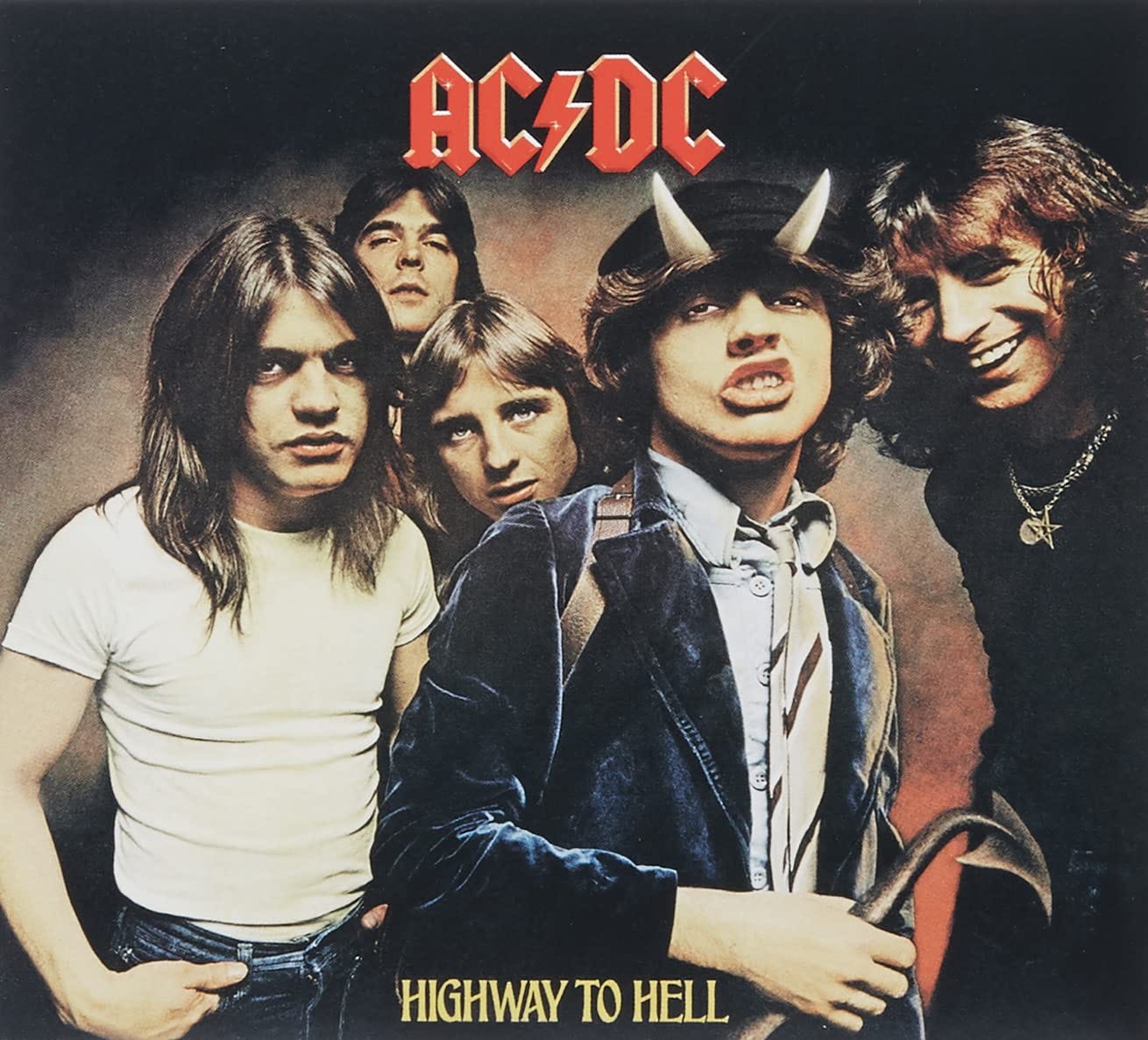
Our members voted AC/DC’s Highway to Hell into this episode, turning a listener submission into a full-album conversation. The 1979 record hardly needs rescuing from obscurity, but the musicianship underneath those familiar riffs deserves another listen. Want to bring YOUR favorite lost album to the table? Suggest it for a future episode.

What if knowing every riff is exactly what keeps us from hearing the band?
That was the problem waiting for us inside Highway to Hell. We knew the opening chords. We knew the voice. We knew the cover, the reputation, the songs that somehow entered our lives without requiring us to own the record.
But familiarity can turn music into furniture. You recognize it, accept its presence, and stop asking how somebody built the thing.
Our conversation became less about whether AC/DC belongs in the rock canon and more about what happens when we stop treating that status as an explanation. Why do these particular chords hit this hard? Why does the space between them matter? And how did a record that once looked threatening become something almost everybody can agree to leave playing?
The Producer Who Made AC/DC More Like AC/DC
A producer can make a band bigger by making it less itself. That is not what happened here.
Released through Albert Productions and Atlantic Records, Highway to Hell was AC/DC’s first album with Robert John “Mutt” Lange. It followed an established working relationship with George Young and Harry Vanda, whose records had already defined the band’s blues-based attack. Atlantic wanted something capable of reaching further in America.
The first attempt involved Eddie Kramer, and the relationship broke down. The episode gets into the wonderfully revealing story of the band telling him not to come into the studio, then recording six songs without him and sending the tape to Lange. Here was a group resisting a particular collaborator, not necessarily the idea of getting better.
At Roundhouse Recording Studios in London, Lange helped refine the performances, vocal delivery, and backing harmonies. The important distinction is what we hear in the result: definition without sterilization. The guitars still sound physical. The drums still leave air around the beat. The choruses grow without becoming disconnected from the band underneath them.
That is the production achievement we kept returning to. We do not hear somebody apologizing for AC/DC’s limitations. We hear somebody recognizing its strengths closely enough to make them carry further.
There is a difference between dressing a band for a bigger room and teaching the room how to hear it. To our ears, Lange accomplished the second.
Simple Chords, Complicated Listening
You could clap the opening riff of “Highway to Hell” and identify the song without playing its notes.
That was our shorthand for the writing. The rhythm carries so much identity that the melody almost becomes additional information. Yet reducing the song to its chord changes tells us remarkably little about why the recording works.
Listen to Angus Young and Malcolm Young as two musicians making separate decisions, not as one guitar sound spread across a stereo field. One part establishes the shape. Another adds an accent, cuts off, or supplies a different kind of push. The interest lives in their relationship.
Then listen beneath them. Cliff Williams does not have to announce every contribution for the bass to matter. Phil Rudd does not need a parade of fills to make the song move. We hear players understanding when the most valuable thing they can do is hold their position.
The title track’s deliberate pace is part of that effect. It feels heavy because it allows anticipation. The next chord is coming, but the band does not hurry to reassure us. There is enough room to hear the attack, the sustain, and the silence that makes the next attack meaningful.
This is where our conversation became an argument against confusing efficiency with feel. Duplicating a guitar track might thicken a recording. It cannot automatically reproduce the interaction between two people who know how to play around each other. That is not an argument against recording technology. It is an argument for knowing which human differences are doing the work.
Our members chose this record, and their comments became part of the episode. Join the community to take part in the next ballot: paid members decide which album becomes a full episode and article.
The Dance Floor Under the Distortion
The funniest thing about AC/DC’s intimidating reputation is how much of this record wants us to move.
“Girls Got Rhythm” makes the point immediately. Beneath the grit, we hear a tightly written, danceable song. Change the vocal delivery and it becomes easier to imagine the underlying structure traveling well outside hard rock. The aggression is not a substitute for the hook. It is one of the ways the hook reaches us.
That tension reminded us of Van Halen: songs with an almost pop-level instinct for pleasure, performed with enough raw personality that nobody mistakes the delivery for politeness.
“Love Hungry Man” pushes the thought further. Its bass-and-drum relationship struck us as almost disco-like, a pocket that complicates the lazy idea of AC/DC doing one thing at one speed. We are not reclassifying the record. We are noticing how much rhythmic variety survives inside its unmistakable sound.
Put that beside the quicker, tightly wound “Beating Around the Bush” or the slow blues of “Night Prowler.” The tones remain recognizable, but the songs ask the musicians to behave differently. Consistency is not the same thing as interchangeability.
“Touch Too Much” also made us hear the next decade approaching. The verse simmers; the chorus opens into those big harmonies. We could hear a template that later hard rock would use repeatedly, sometimes with considerably less character.
That was one of the rewards of revisiting the whole album instead of waiting for familiar tracks to appear on the radio. The shared sound stopped hiding the differences. It started making those differences more interesting.
Bon Scott Makes the Empty Space Talk
A distinctive voice can identify a band. A distinctive personality can make us keep listening after identification stops being interesting.
Bon Scott does both here. Highway to Hell was his final AC/DC album before his death on February 19, 1980, but we resisted hearing it only as a farewell. The performances are too alive, too amused, and too full of intention to exist solely beneath that shadow.
“Night Prowler” gives him space to inhabit a character. The slower arrangement leaves room for an inflection to become an event. We hear somebody enjoying what a voice can suggest, not merely forcing it through the top of the mix.
That is also why the lyrics rewarded another pass. The subject matter is hardly difficult to identify: sex, drinking, getting into trouble. But the phrasing can be more vivid than the summary. In “If You Want Blood (You’ve Got It),” the imagery of a Christian thrown to the lions turns a rock-and-roll demand into something desperate and theatrical.
Our comparison was the difference between David Lee Roth and Sammy Hagar, or between Scott and Brian Johnson. That is a preference about personality and language, not a denial of what the later singers could deliver. We hear an extra layer in Scott’s choices that gives repeated listening somewhere to go.
Lange’s contribution matters here, too. Accounts of the sessions describe him helping Scott with breath control and demonstrating the technique himself. Better technique did not erase the character. It gave that character more control over the room.
Our Verdict: Craftsmanship Is Not the Same as Your Favorite Record
Can an album feel almost impossible to fault without becoming one of your personal favorites?
That distinction gave our closing discussion more substance than a victory lap. We found remarkably little we wanted changed, but admiration and emotional attachment are not identical. A record can demonstrate extraordinary command of its own language without becoming the one you reach for during every important moment of your life.
There is room for resistance here. The lyrical world is narrow, and listeners who want a broader emotional range may not find it. Even AllMusic’s enthusiastic review recognizes the album’s devotion to sex, drinking, and outrageous behavior. Its reader reviews offer a useful counterpoint to the reputation, too: some celebrate an uninterrupted run of great songs, while others hear a stronger first side and less remarkable material later on.
“Love Hungry Man” supplies the most entertaining complication. Angus himself disparaged the song in a 1998 interview. We were more inclined to defend the groove than accept the guitarist’s dismissal.
What stayed with us was the distance between our younger assumptions and our present ears. We once heard something basic. Now we hear discipline, interaction, and decisions that flashier playing could easily obscure.
Which track best disproves the idea that AC/DC always plays the same song? Does “Love Hungry Man” deserve its place? And can you separate the album you admire most from the one you love most?
Our members put this record on the table. Join the community to help choose what we make next, then listen to the full episode for our verdict and leave a comment with the track that makes your case.
Episode Highlights
00:50: The member poll, why a familiar giant beat the deep cuts.
03:41: Discovering AC/DC, childhood memories and the confusing American release sequence.
12:35: Changing producers, the road from Eddie Kramer to Mutt Lange.
24:53: Simple chords, why listening matters more than showing off.
27:26: Girls Got Rhythm, the danceable song underneath Bon Scott’s grit.
28:44: Love Hungry Man, the almost-disco pocket hiding in plain sight.
30:08: Bon Scott, character, space, and a final studio performance.
43:20: The band’s interplay, what duplicated guitar tracks cannot automatically recreate.
48:37: Beating Around the Bush, variety within an unmistakable sound.
55:28: What does not work, including the song Angus Young disliked.
56:38: If You Want Blood (You’ve Got It), lyrics with more personality than their reputation.
67:46: Final verdict, where our discussion lands.


