


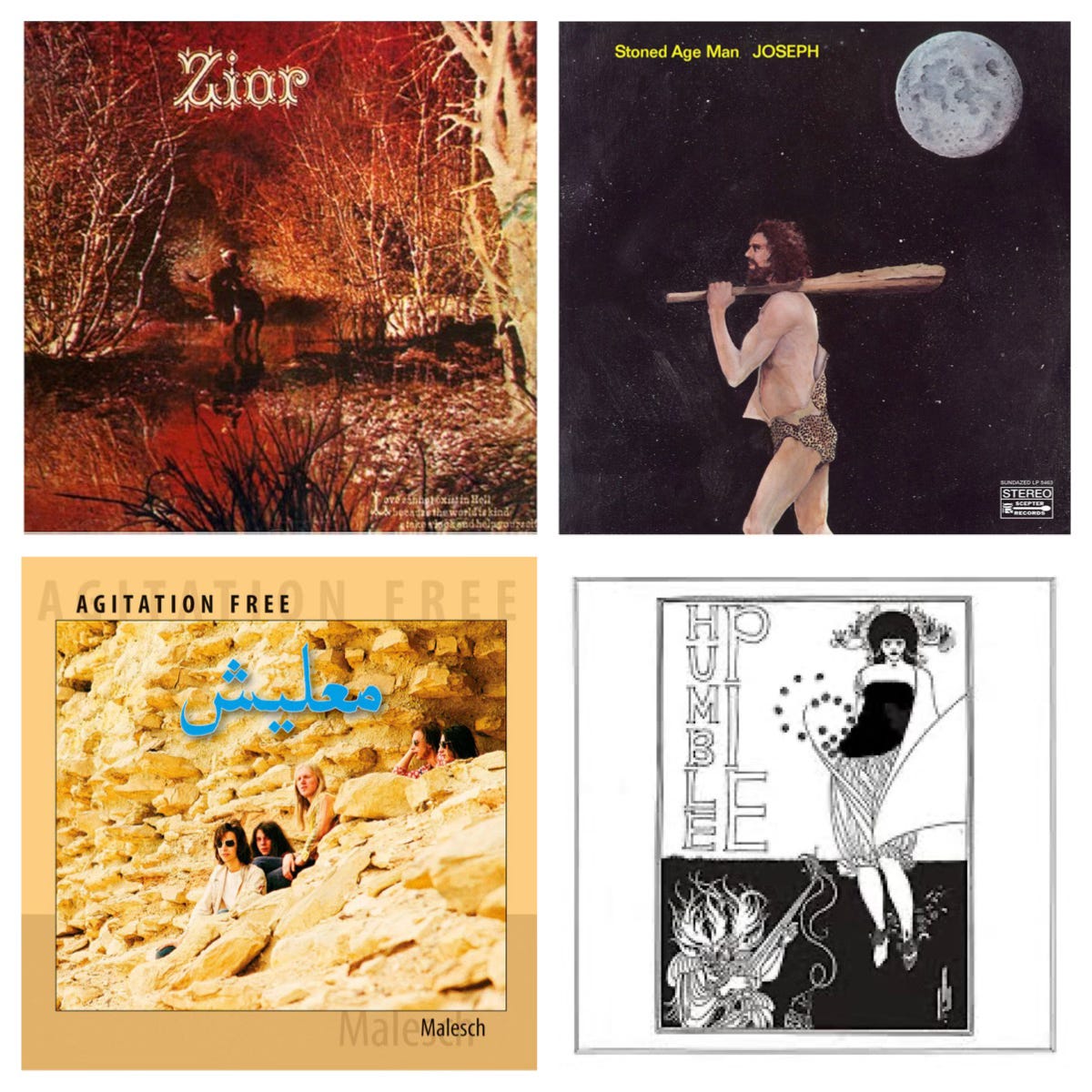
These four heavy 70s records came directly from listeners—now it’s your turn to pick which one we excavate on the show.
While the world kept spinning the same classic rock stations on repeat, these bands were pushing rock into weirder, heavier, and way more experimental territory. They never got the full recognition they deserved. Now’s your chance to change that.
Which one deserves the podcast treatment? Drop your vote in the poll below. Tell us why in the comments. The winner gets dug out, played loud, and given the full analysis.
Got the next album? Suggest a forgotten heavy 70s rock record, an 80s metal deep cut, a 90s alternative hidden gem, or any 00s rock album you think deserves rescuing.
Zior – Zior (1971)
Keith Bonser’s voice cracks through fuzz like a man channeling something otherworldly. The band had the same designer behind Black Sabbath’s debut handle their album cover, and yeah, you feel that darkness. But then come the organ workouts, flute passages, and this occult weirdness the BBC literally reinforced by overlaying footage of Hades when they performed “Oh Mariya” on air.
Heavy riffs mix with trippy prog detours. No safe choices. No middle ground. What you get is pure 70s heavy rock chaos, the sound of what happens when hard rock bands get genuinely curious about keyboards and darkness.
Joseph – Stoned Age Man (1970)
Memphis studio. The Memphis Boys playing, the same cats who backed Elvis. Three different producers working sleep-deprived shifts with no songs written beforehand, just titles and raw inspiration burning in real time. What emerged is blues-fuzz psych-rock so weird it defies easy categorization.
“I Ain’t Fattening No More Frogs for Snakes” is a real track. This album’s been called a cult classic by everyone from Billy Gibbons to underground collectors who treat vinyl like archaeological digs.
Agitation Free – Malesch (1972)
Berlin. 1972. One of Germany’s most innovative krautrock bands returns from a Goethe Institute-sponsored tour through Egypt, Lebanon, Cyprus, and Greece with a debut album that sounds like nothing else on the planet.
Malesch is seven tracks of improvisational krautrock fused with Eastern influences. Lutz Ulbrich’s guitar work. Michael Hoenig’s synthesizers. Burghard Rausch’s drums and percussion layering congas, marimba, and timbales into something hypnotic and completely otherworldly. This album proves heavy rock could embrace experimental sounds without losing its edge. Sahara City, Khan El Khalili, the title track Malesch. Each one builds into a soundscape that feels like a time machine connecting past and future.
These Berlin pioneers were experimenting with liquid projectors and underground films while simultaneously laying the groundwork for what would become the Berlin School of electronic music.
Humble Pie – Humble Pie (1970)
The supergroup that changed everything. Peter Frampton and Steve Marriott. Their first album on A&M Records. A transitional record, darker and heavier and more aggressive than what came before.
One minute you’re hearing Frampton’s delicate ballad (“Earth and Water Song”). The next you’re hit with “One Eyed Trouser Snake Rumba”.
It’s messy. It’s ambitious. It marks the exact moment Humble Pie stopped being precious and started getting dangerous.
Cast your vote. Make your case. Suggest what’s next.